
Introduction
Many people notice a sudden urge to urinate when they enter a swimming pool, hear running water at the beach, or relax near water bodies. While this may seem unusual or even embarrassing, it is actually linked to a combination of physical and psychological responses. Understanding how the bladder reacts in these environments can help individuals manage urinary urgency more effectively and recognize when symptoms may require medical attention.
Understanding the Bladder’s Normal Function
The bladder is a muscular organ responsible for storing urine until the body is ready for elimination. Under normal circumstances, the brain and bladder work together through a complex signaling system. As the bladder fills, nerves send messages to the brain indicating fullness. The brain then determines the appropriate time and place to urinate.
However, certain environmental triggers can influence this process and create a stronger or more sudden urge.
Physical Triggers Behind Pool & Beach Urges
1. Cold Water Response
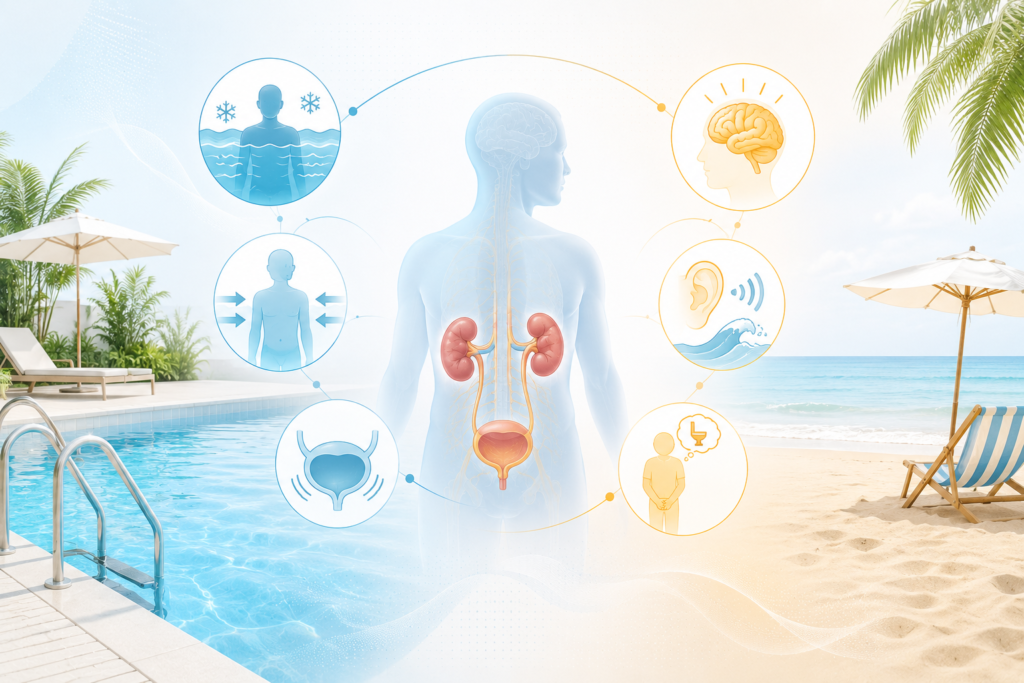
One of the most common physical reasons for increased urination around pools or beaches is exposure to cold water. Cold temperatures cause blood vessels to constrict, which increases blood pressure slightly. In response, the kidneys may filter more fluid, leading to increased urine production — a process known as cold-induced diuresis.
2. Water Pressure on the Body
When submerged in water, external pressure on the body can shift blood circulation toward the chest and abdomen. This change signals the body to remove excess fluid, encouraging urine production.
3. Relaxation of Muscles
Swimming and floating often promote muscle relaxation, including relaxation of the pelvic floor muscles. This can make bladder sensations feel more noticeable and increase urinary urgency.
Psychological Factors and Conditioned Responses
1. Sound and Visual Triggers
The sound of waves, splashing water, or showers can psychologically stimulate the urge to urinate. This is similar to how hearing running water sometimes triggers bladder sensations even when the bladder is not full.
2. Habit Conditioning
Repeated experiences of urinating before swimming or during beach visits can train the brain to associate water environments with bladder emptying. Over time, simply approaching a pool or beach may trigger the urge automatically.
3. Anxiety and Anticipation
Some individuals become overly focused on finding restrooms in public places. This heightened awareness can increase bladder sensitivity and create a sensation of urgency even with minimal urine volume.
When Is It Considered Normal?
Occasional urinary urgency around pools or beaches is generally normal and harmless. However, medical evaluation may be necessary if symptoms include:
- Frequent urination throughout the day
- Sudden inability to hold urine
- Burning sensation during urination
- Pelvic pain or pressure
- Leakage of urine
- Nighttime urination disrupting sleep
These symptoms could indicate conditions such as overactive bladder, urinary tract infection, pelvic floor dysfunction, or other urological concerns.
Tips to Manage Pool & Beach Bladder Urges
Stay Hydrated Wisely
Avoid excessive dehydration, as concentrated urine can irritate the bladder.
Practice Bladder Training
Gradually increasing the time between bathroom visits may help reduce urgency.
Limit Bladder Irritants
Reduce intake of caffeine, alcohol, and carbonated drinks before swimming or beach outings.
Strengthen Pelvic Floor Muscles
Pelvic floor exercises may improve bladder control and reduce urgency episodes.
Conclusion
Pool and beach bladder behavior is influenced by both physical body responses and psychological conditioning. While occasional urgency is usually harmless, persistent or disruptive symptoms should not be ignored. A better understanding of these triggers can help individuals maintain bladder health and seek timely urological care when necessary.