
Introduction
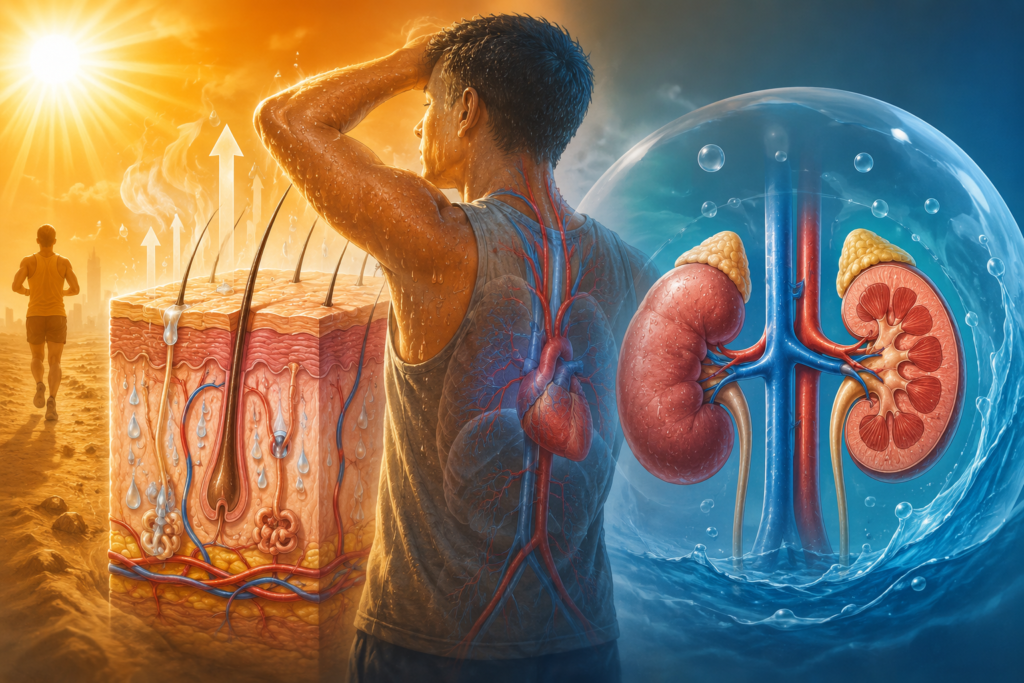
Extreme heat places enormous stress on the human body, forcing multiple organ systems to work harder to maintain balance. One of the most important internal competitions during high temperatures occurs between the skin and the kidneys. While the skin focuses on cooling the body through sweating, the kidneys aim to conserve water and maintain electrolyte balance. Understanding this physiological tug-of-war is especially important in urology because prolonged dehydration and heat stress can significantly affect kidney health.
How the Body Responds to Extreme Heat
When environmental temperatures rise, the body activates its cooling mechanisms to prevent overheating. Blood vessels near the skin widen, allowing more blood flow to the surface. Sweating begins, and evaporation helps lower body temperature.
At the same time, fluid loss through sweat reduces overall blood volume. To compensate, the body releases hormones such as antidiuretic hormone (ADH), which signals the kidneys to retain water and reduce urine production.
The Skin’s Priority During Heat Exposure
The skin becomes the body’s frontline defense during extreme heat. Cooling the body takes immediate priority because overheating can quickly lead to heat exhaustion or heat stroke.
Increased Sweating
Sweat glands become highly active to release heat through evaporation. This process can lead to substantial fluid and electrolyte loss.
Redistribution of Blood Flow
More blood is directed toward the skin to aid cooling. As a result, other organs, including the kidneys, may temporarily receive reduced blood flow.
The Kidneys’ Role Under Heat Stress
The kidneys work continuously to preserve hydration and maintain stable sodium, potassium, and fluid levels.
Reduced Urine Output
To prevent dehydration, the kidneys concentrate urine and reduce fluid loss. Dark-colored urine is often an early sign of this conservation process.
Risk of Kidney Injury
When dehydration becomes severe, reduced blood flow to the kidneys can impair their function. In extreme cases, this may result in acute kidney injury (AKI), particularly in older adults, outdoor workers, athletes, and individuals with pre-existing kidney disease.
Which Organ System Gets Priority?
In survival terms, the body temporarily prioritizes the skin during extreme heat because regulating temperature is essential for immediate survival. However, this protective mechanism can place significant stress on the kidneys.
The longer dehydration persists, the harder the kidneys must work to conserve fluids. Eventually, prolonged heat exposure may overwhelm the kidneys’ ability to compensate.
Urological Concerns Linked to Extreme Heat
Heat-related dehydration has direct implications for urinary and kidney health.
Kidney Stones
Low fluid intake and excessive sweating increase urine concentration, raising the risk of kidney stone formation.
Urinary Tract Problems
Concentrated urine may irritate the urinary tract and contribute to discomfort or infection risk.
Chronic Kidney Stress
Repeated episodes of dehydration can gradually damage kidney tissue over time.
Prevention Strategies
Protecting both the skin and kidneys during hot weather requires proactive hydration and heat management.
- Drink water regularly, even before feeling thirsty.
- Limit outdoor activity during peak afternoon heat.
- Replace lost electrolytes during prolonged sweating.
- Monitor urine color for signs of dehydration.
- Seek medical attention for dizziness, reduced urination, or persistent fatigue.
Conclusion
During extreme heat, the body prioritizes cooling through the skin to prevent dangerous overheating. However, this survival response can strain the kidneys, especially when dehydration becomes severe. From a urology perspective, maintaining hydration is essential not only for temperature regulation but also for preserving long-term kidney and urinary health.