
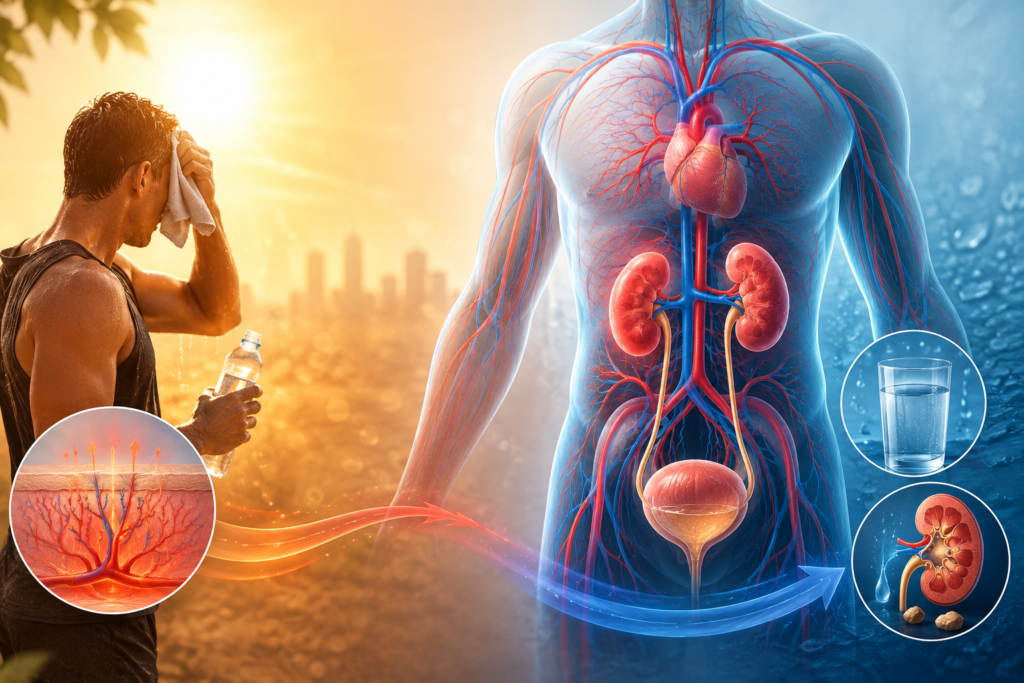
Hot weather affects the human body in many ways beyond sweating and dehydration. One lesser-known physiological response is the redistribution of blood flow during heat exposure. As the body works to maintain a stable internal temperature, circulation patterns change significantly — and these changes can influence urinary function as well.
Understanding Blood Flow Redistribution in Heat
When the body is exposed to high temperatures, it activates cooling mechanisms to prevent overheating. One major response is vasodilation, where blood vessels near the skin surface widen to release heat.
As a result:
- More blood is directed toward the skin
- Blood flow to internal organs may temporarily decrease
- Sweating increases to cool the body through evaporation
This redistribution helps maintain temperature balance but also places additional stress on the cardiovascular and fluid regulation systems.
How Heat Impacts Kidney Function
The kidneys play a central role in filtering blood, balancing fluids, and producing urine. During heat exposure, the body prioritizes water conservation to prevent dehydration.
Because of this:
- The kidneys receive relatively less blood flow
- Urine production may decrease
- Urine becomes more concentrated
This is a protective mechanism designed to preserve essential body fluids. However, prolonged heat exposure or inadequate hydration can strain kidney function over time.
Changes in Urinary Function During Heat Exposure
Heat-related blood flow redistribution can lead to several noticeable urinary changes.
Reduced Urine Output
People often urinate less in hot weather because fluid is lost primarily through sweat. The body compensates by conserving water in the kidneys.
Darker Urine
Concentrated urine appears darker and may indicate dehydration. This is common during intense heat or physical activity.
Increased Risk of Urinary Tract Issues
Dehydration can increase the risk of:
- Urinary tract infections (UTIs)
- Kidney stones
- Bladder irritation
Lower urine volume means waste products remain more concentrated in the urinary tract.
Can Heat Cause Frequent Urination?
Interestingly, some individuals experience the opposite effect — more frequent urination during heat exposure. This may occur due to:
- Increased fluid intake
- Electrolyte imbalance
- Underlying medical conditions such as diabetes or overactive bladder
In older adults, heat stress may also worsen existing urinary symptoms.
Who Is Most Vulnerable?
Certain groups are more sensitive to heat-related urinary changes, including:
- Elderly individuals
- Outdoor workers
- Athletes
- People with kidney disease
- Individuals taking diuretics
These populations should be especially cautious during extreme temperatures.
Tips to Protect Urinary Health in Hot Weather
Maintaining hydration is the most effective way to support urinary function during heat exposure.
Helpful Preventive Measures
- Drink water regularly throughout the day
- Avoid excessive caffeine and alcohol
- Wear lightweight clothing
- Replace electrolytes after heavy sweating
- Monitor urine color as a hydration indicator
If symptoms such as dizziness, extremely dark urine, pain during urination, or reduced urination persist, medical attention may be necessary.
Conclusion
Blood flow redistribution during heat exposure is a natural survival response that helps regulate body temperature. However, these circulatory changes can influence kidney performance and urinary function, particularly when dehydration occurs. Understanding how heat affects the body can help individuals take preventive steps to maintain hydration, protect kidney health, and reduce the risk of urinary complications during hot weather.