
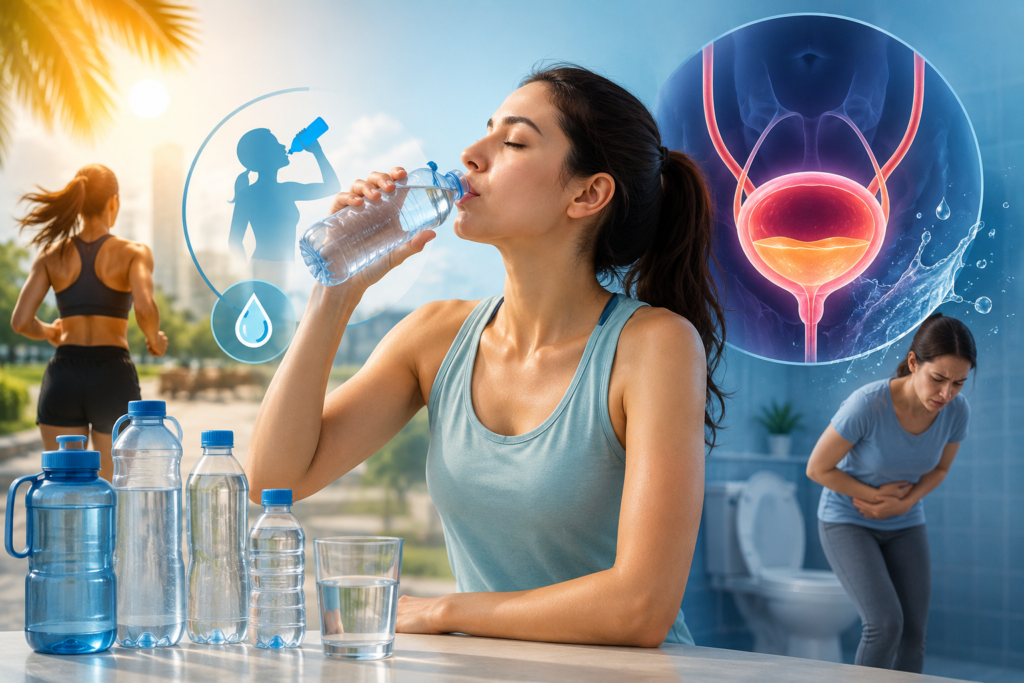
Summer arrives with constant reminders to stay hydrated. From fitness influencers to workplace wellness tips, the message is everywhere: drink more water. While hydration is essential during hot weather, many people unknowingly swing to the other extreme — excessive water intake that may strain the bladder and disrupt the body’s natural balance.
The idea that “more is always better” does not apply to water consumption. Overhydration can create its own set of problems, especially during summer when people consciously force themselves to drink beyond their body’s actual needs.
Why Hydration Matters in Summer
High temperatures increase sweating, which leads to fluid and electrolyte loss. Proper hydration helps regulate body temperature, supports digestion, maintains energy levels, and prevents dehydration-related symptoms such as dizziness, headaches, and fatigue.
However, hydration needs vary depending on:
- Body size and age
- Physical activity levels
- Humidity and climate
- Existing medical conditions
- Diet and caffeine intake
A person sitting indoors in air conditioning does not require the same amount of water as someone working outdoors in peak heat.
When “Healthy Hydration” Becomes Overhydration
Many people now carry large bottles and set hourly hydration goals without considering thirst signals. Drinking excessive amounts of water in a short time can overload the kidneys and bladder.
Common signs of overhydration include:
- Frequent urination
- Constant urge to pee
- Clear, colorless urine all day
- Bloating or stomach discomfort
- Interrupted sleep due to nighttime urination
- Headaches or nausea in severe cases
The bladder is designed to store urine temporarily, but constantly filling it with excess fluids can increase urinary frequency and discomfort.
How Excess Water Affects the Bladder
The bladder works efficiently when fluid intake is balanced. Excessive water consumption forces it to empty more often, which may irritate sensitive bladders and worsen symptoms in people already dealing with urinary issues.
In some cases, people may experience:
Increased Urinary Urgency
Drinking too much water can create a persistent feeling of urgency, even when the bladder is not completely full.
Sleep Disruption
Excess hydration late in the evening often leads to waking up multiple times at night to urinate, affecting sleep quality.
Electrolyte Imbalance
Extreme overhydration can dilute sodium levels in the body, a condition known as hyponatremia. Though uncommon, it can become serious if ignored.
Smart Hydration: Finding the Right Balance
Instead of blindly following fixed “water targets,” focus on balanced hydration habits.
Drink According to Thirst
Thirst remains one of the body’s most reliable hydration signals for healthy individuals.
Check Urine Color
Pale yellow urine usually indicates adequate hydration. Completely clear urine throughout the day may suggest overhydration.
Adjust for Activity and Heat
Increase fluid intake during exercise, outdoor work, or heavy sweating rather than forcing excessive intake at all times.
Include Electrolytes Naturally
Coconut water, fruits, vegetables, and balanced meals help maintain electrolyte balance during summer.
Conclusion
Staying hydrated in summer is important, but excessive water intake is not automatically healthier. Overloading the bladder with unnecessary fluids can lead to discomfort, disrupted sleep, and even electrolyte imbalance in extreme cases. The goal should not be to drink the maximum amount possible, but to maintain a balanced approach that supports the body without overwhelming it.