
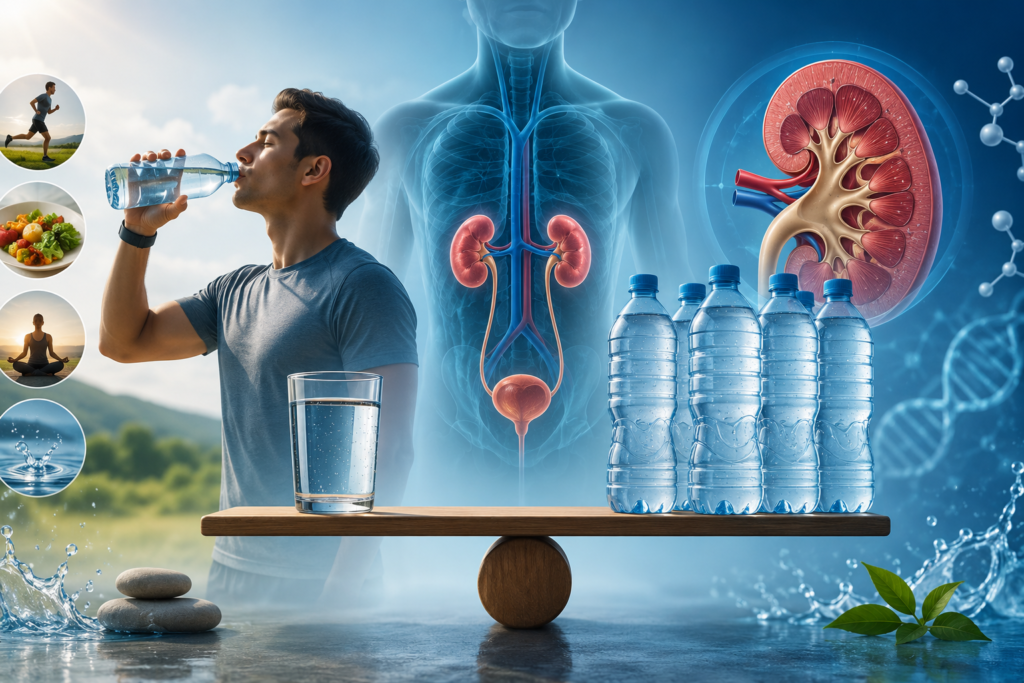
Introduction
In recent years, hydration has become one of the biggest wellness trends. From oversized water bottles to “drink a gallon a day” challenges, many people now believe that consuming large amounts of water automatically leads to better health. While staying hydrated is essential, doctors and urologists warn that excessive water intake — such as drinking 5 to 6 litres daily without medical need — does not necessarily indicate healthy kidneys. In some cases, it may even be harmful.
Understanding the difference between wellness trends and evidence-based medical advice is key to maintaining overall urinary and kidney health.
Why Hydration Matters
Water plays a vital role in the body. It helps regulate temperature, transport nutrients, remove waste, and maintain healthy kidney function. Proper hydration also reduces the risk of urinary tract infections and kidney stones by keeping urine diluted.
However, the body’s water requirements vary from person to person. Factors such as age, climate, physical activity, diet, and existing medical conditions all influence how much water an individual actually needs.
The Risks of Overhydration
Many people assume that drinking more water is always beneficial, but excessive water intake can disrupt the body’s natural balance. When too much water is consumed in a short period, sodium levels in the blood may drop dangerously low — a condition known as hyponatremia.
Symptoms of overhydration may include:
- Headache
- Nausea
- Fatigue
- Muscle cramps
- Confusion
- Frequent urination
In severe cases, overhydration can place stress on the kidneys and other organs. Healthy kidneys can process large amounts of fluid, but forcing excessive intake without need does not improve kidney performance.
Listening to Your Body Instead of Trends
Medical experts recommend focusing on the body’s natural hydration signals rather than following viral health trends blindly. Thirst remains one of the most reliable indicators of hydration needs for most healthy adults.
Urine color can also be a useful guide:
- Pale yellow urine generally indicates adequate hydration.
- Dark yellow urine may suggest dehydration.
- Completely clear urine all the time can sometimes indicate excessive water intake.
Rather than targeting extreme water goals, people should aim for balanced hydration throughout the day.
Personalized Hydration Is the Key
There is no universal “perfect” amount of water suitable for everyone. For example:
- Athletes and outdoor workers may require more fluids.
- Patients with kidney stones are often advised to increase water intake.
- Individuals with kidney disease or heart conditions may actually need fluid restrictions.
This is why medical science emphasizes personalized recommendations instead of one-size-fits-all wellness advice.
Conclusion
Hydration is important, but more water does not always mean better health. The right balance lies in understanding your body’s needs, following medical guidance when necessary, and avoiding extreme wellness trends. True kidney health depends not on excessive water consumption, but on maintaining consistent, balanced, and informed hydration habits.