
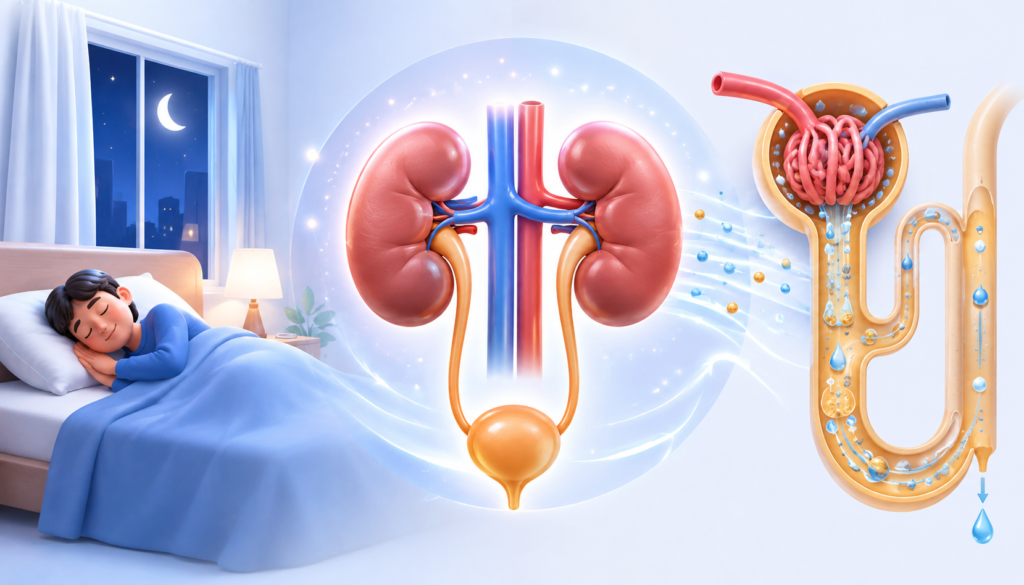
While You’re Sleeping, Your Kidneys Are Working the Night Shift
Most people think the body completely rests during sleep. While your muscles relax and your mind recovers, your kidneys continue to work around the clock. These two bean-shaped organs quietly perform one of the body’s most important jobs—filtering your blood, removing waste, balancing fluids, and maintaining the right levels of essential minerals. Even while you sleep, your kidneys never take a break.
What Happens to Your Kidneys Overnight?
Every day, your kidneys filter approximately 50 gallons (around 180 liters) of blood to remove waste products and excess fluids. During the night, they continue this process, ensuring that harmful toxins do not build up in your body.
While you’re asleep, your kidneys help:
- Remove waste products from the bloodstream
- Balance water and electrolyte levels
- Regulate blood pressure
- Maintain healthy acid-base balance
- Produce urine that is stored in the bladder until morning
Your body’s natural rhythm also changes overnight. Hormones released during sleep reduce urine production, allowing you to enjoy uninterrupted rest while your kidneys continue filtering efficiently.
Why Hydration Matters
Water is essential for healthy kidney function. Proper hydration helps your kidneys flush out toxins and waste products more effectively while maintaining the body’s fluid balance.
When you don’t drink enough water, your kidneys have to work harder. Dehydration can lead to concentrated urine, increasing the risk of kidney stones, urinary tract infections, and, over time, kidney damage.
A well-hydrated body allows the kidneys to function smoothly and efficiently, reducing unnecessary strain on these vital organs.
Signs You May Not Be Drinking Enough Water
Your body often gives early warning signs of dehydration. Watch for:
- Dark yellow urine
- Dry mouth or excessive thirst
- Fatigue
- Headaches
- Dizziness
- Reduced urine output
If these symptoms occur frequently, increasing your daily water intake may help support better kidney health.
Simple Tips to Keep Your Kidneys Healthy
Protecting your kidneys doesn’t require complicated changes. A few healthy habits can make a significant difference:
- Drink adequate water throughout the day.
- Eat a balanced diet rich in fruits and vegetables.
- Limit excessive salt and processed foods.
- Stay physically active.
- Manage blood pressure and blood sugar levels.
- Avoid smoking and excessive alcohol consumption.
- Do not overuse painkillers unless advised by your doctor.
- Schedule regular health check-ups, especially if you have diabetes or hypertension.
Final Thoughts
Your kidneys are among the hardest-working organs in your body. Even while you’re sleeping, they continue filtering your blood, maintaining fluid balance, and removing waste to keep you healthy. Supporting them is as simple as staying hydrated and following a healthy lifestyle.
Remember, your kidneys work the night shift every single day—give them the care they deserve, because healthy kidneys are essential for a healthy life.