
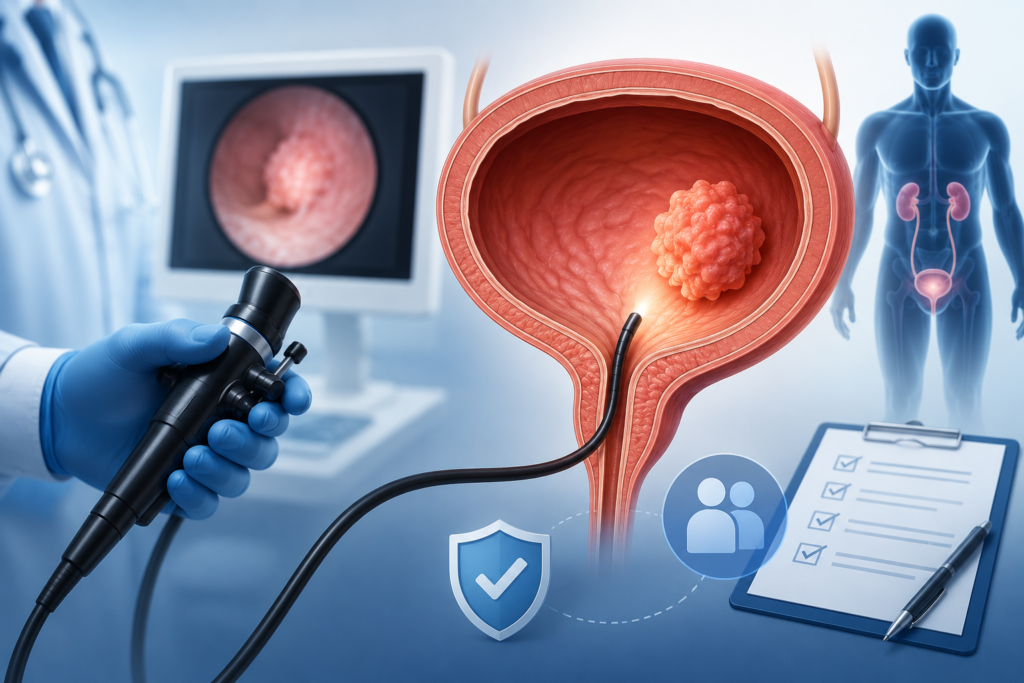
Bladder cancer is a urological cancer that can return even after successful treatment. This is known as bladder cancer recurrence. Because recurrence is relatively common, regular follow-up is an important part of long-term care. Early detection allows doctors to identify changes before they become more difficult to treat.
Why Does Bladder Cancer Come Back?
Bladder cancer can recur because abnormal cells may remain in the bladder lining or new tumours may develop over time. The risk of recurrence depends on factors such as the type, grade, and stage of the original cancer, the number of tumours, and the treatment received.
Some patients may experience recurrence within the bladder, while in other cases, cancer may develop in different parts of the urinary tract.
Why Is Regular Follow-Up Important?
After bladder cancer treatment, follow-up appointments help your urologist or uro-oncologist monitor for recurrence and assess your overall urinary health.
Depending on your individual risk, follow-up may include:
- Cystoscopy to examine the inside of the bladder
- Urine tests or urine cytology
- Imaging tests when clinically required
- Regular review of urinary symptoms and treatment response
The frequency of these tests varies according to the stage and risk category of the cancer.
Symptoms That Should Not Be Ignored
Even between scheduled appointments, certain symptoms should prompt medical evaluation. These may include:
- Blood in the urine
- Burning or discomfort while urinating
- Frequent or urgent urination
- Difficulty passing urine
- Unexplained changes in urinary habits
Blood in the urine, particularly when it is painless, should always be evaluated by a medical professional.
Follow-Up Is Part of Treatment
Completing treatment does not necessarily mean that follow-up can be stopped. Regular monitoring helps detect recurrence early and allows timely treatment when necessary. It also gives patients an opportunity to discuss urinary symptoms, treatment effects, and concerns about their recovery.
Takeaway
Bladder cancer requires long-term vigilance. Following your recommended surveillance schedule and reporting new urinary symptoms promptly can play an important role in managing recurrence and maintaining your health. Always follow the follow-up plan advised by your urologist or uro-oncology specialist.