
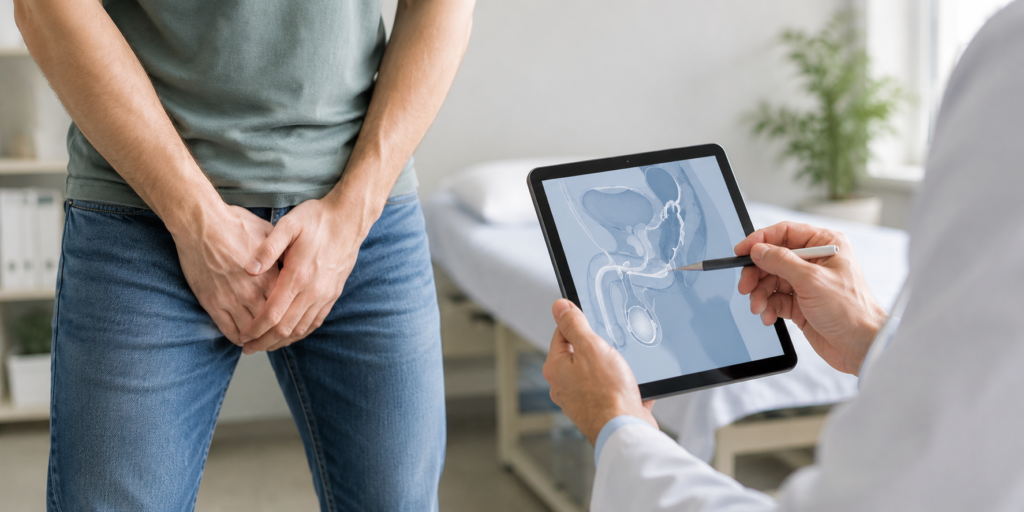
Why a Painless Lump Should Never Be Ignored
Many people postpone getting a painless lump or swelling checked because it doesn’t hurt or interfere with daily life. Whether it’s a swelling in the scrotum, groin, or lower abdomen, the absence of pain doesn’t always mean it’s harmless. In urology, early evaluation can make a significant difference by identifying minor conditions before they become more complicated.
A small swelling may remain harmless in some cases, but in others, it can gradually increase in size, affect comfort, fertility, or even indicate a more serious underlying condition. The safest approach is to have it examined rather than waiting for symptoms to worsen.
Common Causes of Urological Swelling
Several conditions can cause lumps or swelling in the groin or scrotal area. Some are harmless, while others require prompt treatment.
Hydrocele
A hydrocele is a collection of fluid around the testicle that causes painless swelling. It often develops gradually and may become larger over time.
Varicocele
This occurs when veins inside the scrotum become enlarged. It may feel like a “bag of worms” and can sometimes affect fertility if left untreated.
Inguinal Hernia
A hernia happens when tissue pushes through a weak area in the abdominal wall, creating a bulge in the groin. It may start small but can become painful or develop complications later.
Epididymal Cyst
These fluid-filled cysts are usually harmless, but they should still be evaluated to confirm the diagnosis.
Testicular Tumors
Although less common, a painless lump in the testicle can be an early sign of testicular cancer. Early detection greatly improves treatment outcomes.
Warning Signs You Shouldn’t Ignore
Seek medical evaluation if you notice:
- A new lump or swelling in the testicle or groin
- Swelling that gradually increases in size
- A feeling of heaviness in the scrotum
- A lump that doesn’t disappear after several days
- Pain, redness, or sudden swelling
- Changes in the size or shape of a testicle
How Urologists Diagnose the Cause
Most evaluations are straightforward and painless. Your urologist may recommend:
- A physical examination
- Scrotal ultrasound
- Urine tests if infection is suspected
- Additional imaging or blood tests when needed
An ultrasound is particularly helpful because it can distinguish between fluid-filled swelling, enlarged veins, hernias, and solid masses.
Why Early Evaluation Matters
Delaying evaluation can allow certain conditions to progress. A hernia may become trapped, a varicocele may continue affecting fertility, and a testicular tumor may grow before it’s detected.
Early diagnosis offers several benefits:
- Simpler treatment options
- Better recovery
- Reduced risk of complications
- Greater peace of mind
Don’t Wait for Pain to Be Your First Warning
Pain is not always the first sign of a urological problem. If you notice a lump or swelling, even if it feels small and doesn’t hurt, it’s worth getting it checked.
A quick consultation and a simple examination can provide clarity and ensure that any necessary treatment begins at the right time. When it comes to your urological health, that small swelling deserves attention before it has the chance to become a bigger problem.