
Introduction
Extreme heat challenges the human body in remarkable ways. As temperatures rise, the body activates multiple systems to maintain a safe internal balance. Among the most important organs involved in this process are the skin and the kidneys. While the skin works to cool the body through sweating and heat release, the kidneys focus on conserving fluids and maintaining electrolyte balance.
During severe heat exposure, the body must prioritize survival functions. This often creates a temporary competition between cooling the body and protecting kidney function. Understanding this balance is essential in urology because prolonged heat stress and dehydration can significantly affect kidney health.
The Skin: The Body’s Cooling System
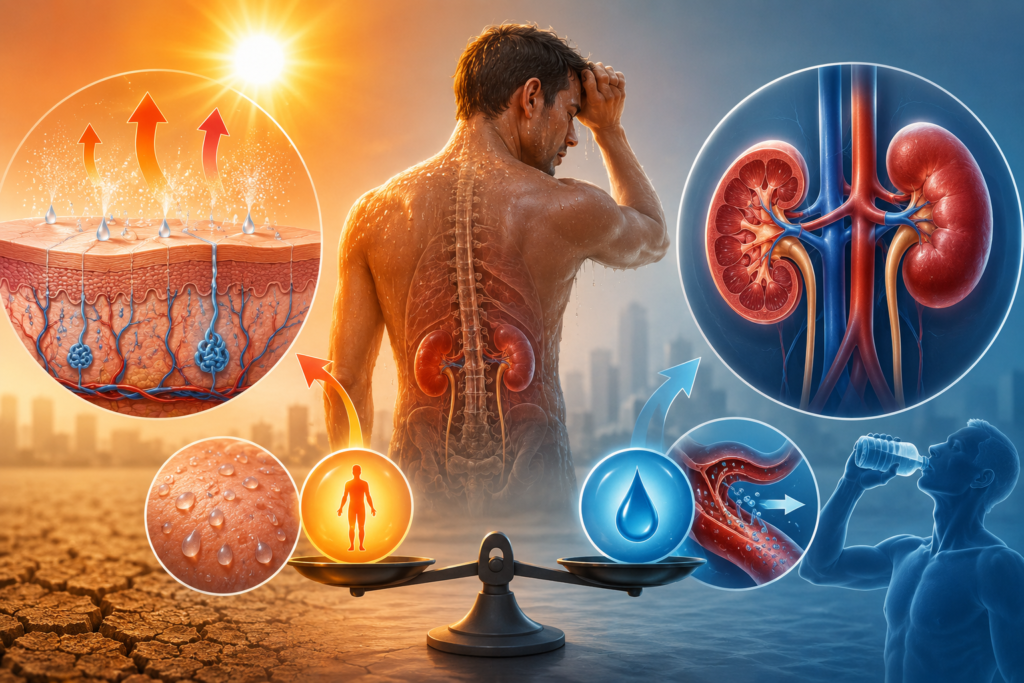
The skin serves as the body’s first line of defense against overheating. When external temperatures increase, blood vessels near the skin surface widen, allowing more heat to escape. Sweat glands become active, producing sweat that evaporates and cools the body.
How the Skin Responds to Heat
- Increased blood flow to the skin
- Activation of sweat glands
- Evaporation-based cooling
- Regulation of body temperature
This cooling mechanism is vital because excessive internal heat can damage organs and lead to life-threatening conditions such as heat stroke.
However, sweating also causes substantial fluid and electrolyte loss. If these losses are not replaced through hydration, the body quickly becomes dehydrated.
The Kidneys: Guardians of Fluid Balance
The kidneys are responsible for filtering waste products, balancing electrolytes, and regulating fluid levels in the body. During hot weather, their role becomes even more important.
How the Kidneys Adapt During Heat
To prevent excessive fluid loss, the kidneys:
- Reduce urine production
- Produce concentrated urine
- Retain sodium and water
- Maintain blood pressure stability
While these adaptations help conserve water, they also place additional stress on kidney function, especially when dehydration becomes severe.
Who Gets Priority During Extreme Heat?
In extreme temperatures, the body prioritizes immediate survival. Since controlling body temperature is critical, the skin temporarily receives more blood flow to support cooling.
As a result:
- More blood is redirected to the skin
- Less blood reaches the kidneys
- Kidney filtration temporarily decreases
This shift helps prevent dangerous overheating but may compromise kidney performance. If dehydration continues, the reduced blood supply to the kidneys can lead to acute kidney injury (AKI).
Impact of Extreme Heat on Kidney Health
Heat-related dehydration can have serious urological consequences, particularly in vulnerable individuals such as:
- Older adults
- Outdoor workers
- Athletes
- Patients with chronic kidney disease
Common Kidney-Related Problems During Heat
1. Acute Kidney Injury (AKI)
Severe dehydration may reduce kidney filtration and damage kidney tissues.
2. Kidney Stones
Concentrated urine increases the likelihood of mineral crystal formation, leading to kidney stones.
3. Urinary Tract Infections (UTIs)
Insufficient hydration reduces urine flow, allowing bacteria to grow more easily.
4. Electrolyte Imbalance
Excessive sweating can disturb sodium and potassium levels, affecting kidney and heart function.
Preventing Heat-Related Kidney Stress
Protecting kidney health during extreme heat requires proactive care.
Important Preventive Measures
- Drink adequate water throughout the day
- Avoid prolonged exposure to direct sunlight
- Replace lost electrolytes when necessary
- Limit excessive physical activity during peak heat
- Monitor urine color for signs of dehydration
Patients with existing kidney disorders should be especially cautious during summer months and heat waves.
Conclusion
During extreme heat, the body temporarily prioritizes the skin’s cooling function over optimal kidney filtration. While this response is necessary for survival, prolonged dehydration and reduced kidney blood flow can place significant stress on the kidneys.
Understanding the relationship between heat regulation and kidney function is increasingly important in modern urology, particularly as global temperatures continue to rise. Staying hydrated and protecting the body from excessive heat are essential steps in preserving long-term kidney health.