
Introduction
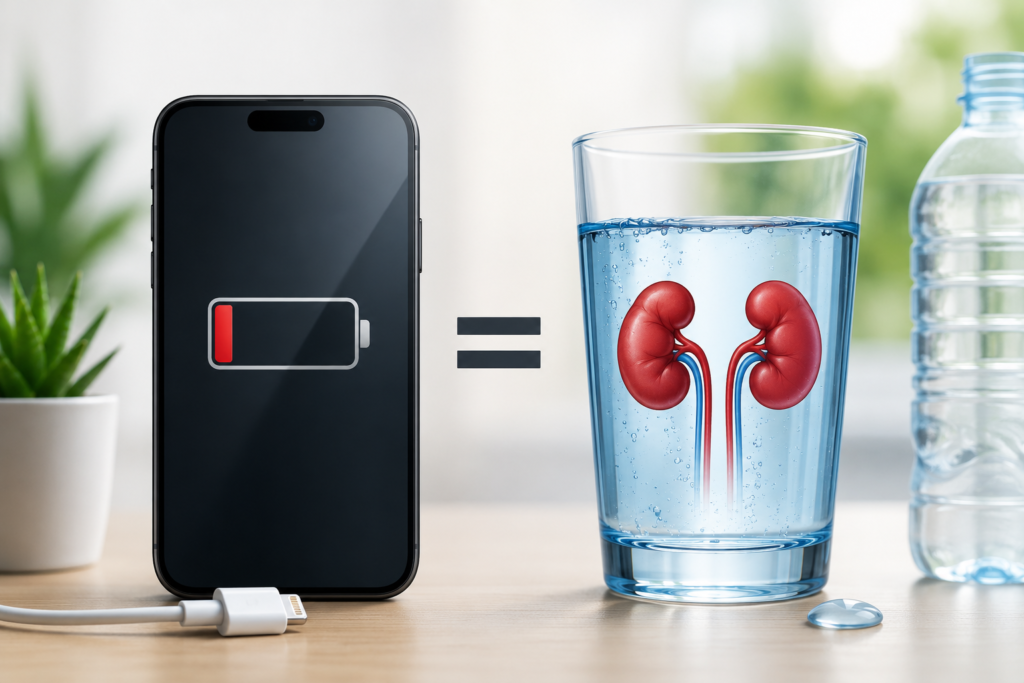
Think about your daily routine. The moment your phone battery drops to 20%, you immediately look for a charger. You know that if you ignore the warning, your phone will eventually shut down.
But when it comes to your own body, do you respond the same way?
Most of us ignore thirst, postpone drinking water, and continue with work, meetings, travel, or binge-watching. Unfortunately, unlike your phone, your body doesn’t always give loud warnings before dehydration starts affecting your health—especially your kidneys.
Your Kidneys Are Your Body’s Natural Filters
Your kidneys work around the clock to remove waste products, balance body fluids, regulate blood pressure, and maintain healthy electrolyte levels.
To perform these functions efficiently, they need an adequate supply of water.
When your body doesn’t receive enough fluids, your kidneys have to work harder to conserve water. Over time, repeated dehydration may increase the risk of kidney stones, urinary tract infections, and, in some cases, reduced kidney function.
The Problem with Waiting Until You’re Thirsty
Many people believe they only need water when they feel thirsty.
However, thirst is often a late signal. By the time you experience noticeable thirst, your body may already be mildly dehydrated.
Busy schedules, air-conditioned offices, long commutes, and excessive tea or coffee consumption can make it even easier to forget drinking enough water.
If you’re constantly waiting for thirst to remind you, you’re already responding later than your body would prefer.
Your Urine Is Your Body’s Battery Indicator
Just like your phone displays a battery percentage, your body provides simple indicators of hydration.
Pay attention to the colour of your urine.
- Pale yellow usually indicates good hydration.
- Dark yellow or amber urine may suggest that your body needs more fluids.
- Strong-smelling urine or infrequent urination can also be signs that you should increase your water intake.
These small changes can tell you a lot about how well your kidneys are functioning.
Simple Habits That Protect Your Kidneys
Maintaining good hydration doesn’t require major lifestyle changes.
- Start your day with a glass of water.
- Carry a reusable water bottle wherever you go.
- Set reminders if you often forget to drink water.
- Drink more fluids during hot weather, exercise, or illness.
- Limit excessive sugary drinks and don’t rely only on tea or coffee for hydration.
Final Takeaway
You wouldn’t ignore your phone’s low battery warning because you know what happens next.
Treat your body with the same care.
Don’t wait until dehydration affects your health. Drinking enough water every day is one of the simplest and most effective ways to support healthy kidneys and maintain your overall well-being.
Your phone can always be recharged. Your kidneys deserve the same attention—before they start asking for help.