
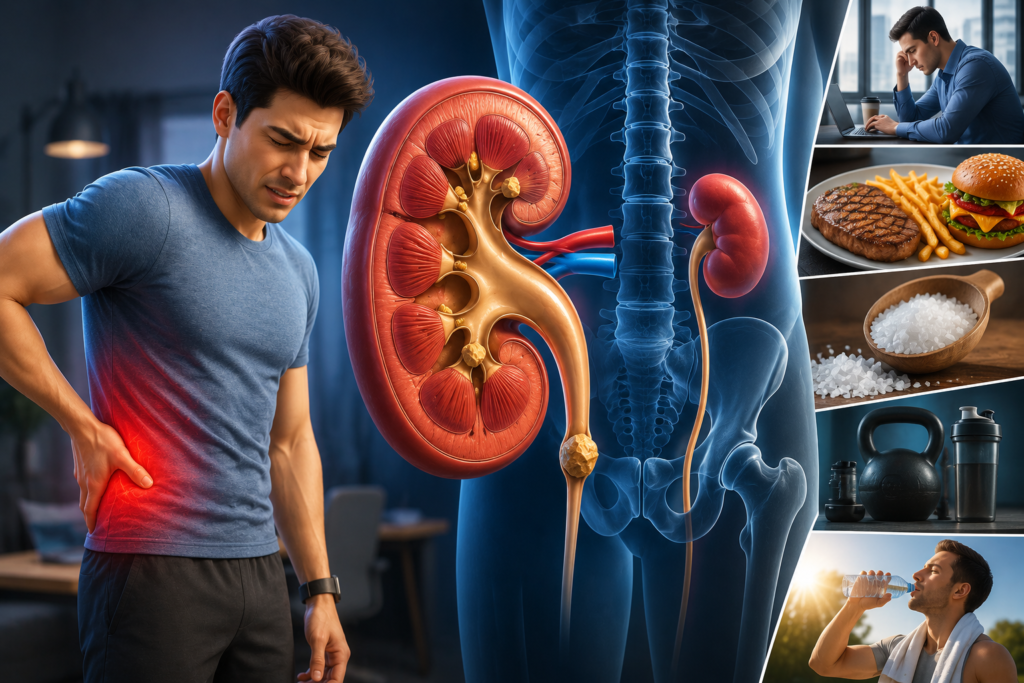
Kidney stones were once considered a condition mainly affecting older adults or people with poor health habits. Today, however, urologists are seeing a growing number of young and otherwise healthy adults developing kidney stones. Even people who exercise regularly, maintain a healthy weight, and eat a balanced diet can be affected.
The increase is linked to modern lifestyle habits, dietary patterns, and environmental factors that often go unnoticed.
What Are Kidney Stones?
Kidney stones are hard deposits made of minerals and salts that form inside the kidneys. They develop when urine becomes highly concentrated, allowing minerals such as calcium, oxalate, and uric acid to crystallize and stick together.
Small stones may pass naturally, while larger ones can cause severe pain and may require medical treatment.
Why Are Healthy Adults at Risk?
1. Not Drinking Enough Water
One of the leading causes of kidney stones is dehydration. Many people believe they drink enough water, but long working hours, frequent travel, hot weather, and regular exercise can increase fluid loss. When urine becomes concentrated, the risk of stone formation rises significantly.
2. High-Protein Diets
Protein-rich diets have become increasingly popular among fitness enthusiasts. While protein is essential for muscle growth, excessive intake of animal protein can increase calcium and uric acid levels in the urine while reducing citrate, a natural substance that helps prevent stones.
A balanced diet is important rather than consuming excessive amounts of protein without medical guidance.
3. Too Much Salt
Processed foods, packaged snacks, fast food, and restaurant meals often contain high levels of sodium. Excess salt causes the kidneys to excrete more calcium into the urine, increasing the likelihood of calcium stone formation.
Reducing sodium intake can significantly lower the risk.
4. Sedentary Lifestyle
Even people who work out for an hour a day may spend the remaining hours sitting at a desk. Prolonged inactivity can affect calcium metabolism and increase the risk of kidney stones.
Regular movement throughout the day supports better kidney health.
5. Climate and Heat Exposure
Rising temperatures and frequent exposure to hot environments lead to increased sweating and fluid loss. Without replacing these fluids, urine becomes more concentrated, making stone formation more likely.
This is particularly common during summer months and among people working outdoors.
6. Family History and Genetics
Some individuals inherit a higher tendency to develop kidney stones. If a close family member has had kidney stones, your own risk may also be higher, even if you maintain a healthy lifestyle.
Warning Signs You Should Not Ignore
Seek medical attention if you experience:
- Severe pain in the back, side, or lower abdomen
- Burning during urination
- Blood in the urine
- Frequent urge to urinate
- Nausea or vomiting
- Fever with urinary symptoms
Early diagnosis can help prevent complications and reduce the need for surgery.
How to Reduce Your Risk
Simple lifestyle changes can lower your chances of developing kidney stones:
- Drink enough water to keep your urine pale yellow.
- Limit excess salt and processed foods.
- Eat a balanced diet with moderate protein intake.
- Include fruits and vegetables rich in natural citrate.
- Stay physically active throughout the day.
- Do not ignore recurring urinary symptoms.
Conclusion
The rise in kidney stones among healthy adults highlights how modern lifestyles can affect kidney health in unexpected ways. Dehydration, excessive salt, high-protein diets, sedentary work, and environmental heat all contribute to stone formation. Understanding these risk factors and making small daily changes can go a long way in protecting your kidneys. If you experience symptoms suggestive of kidney stones, consult a qualified urologist for timely evaluation and appropriate treatment.