
Introduction
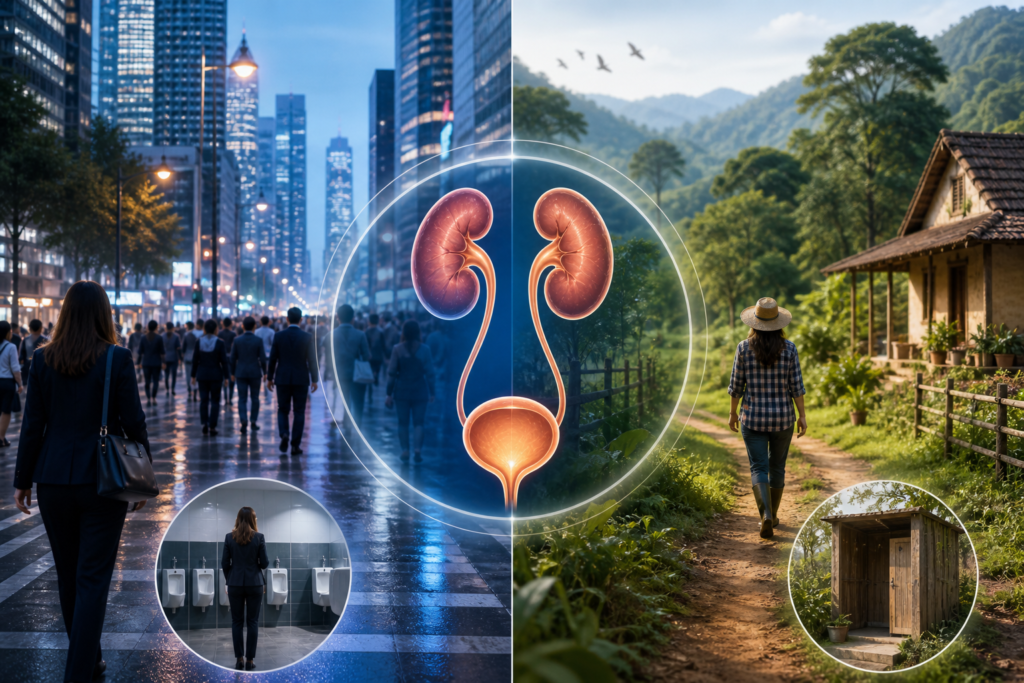
The way people live has a profound impact on their health, including something as routine as urinary habits. Urban and rural lifestyles differ significantly in terms of stress, diet, mobility, and access to facilities. These differences can subtly shape how often, when, and even how comfortably individuals urinate. The concept of the “urban bladder” explores whether city living creates distinct urinary patterns compared to rural life.
Lifestyle and Daily Routines
City life is often fast paced and tightly scheduled. Long commutes, office hours, and limited access to clean public restrooms can lead individuals to delay urination. Over time, this habit may affect bladder sensitivity and capacity. In contrast, rural lifestyles tend to offer more flexibility. People working closer to home or outdoors often have easier access to private spaces, making it less likely that they will consistently hold urine for long periods.
Hydration and Dietary Differences
Urban populations often consume more caffeinated beverages such as coffee, tea, and energy drinks. These act as mild diuretics and can increase the frequency of urination. Processed foods, which are more common in urban diets, may also contribute to irritation of the bladder. Rural diets, often richer in fresh and less processed foods, may support more stable urinary patterns. Additionally, individuals in rural settings might drink water more consistently due to physical labor, which can promote healthier bladder function.
Stress and Its Impact on the Bladder
Stress plays a significant role in urinary behavior. Urban environments are associated with higher levels of psychological stress due to noise, crowding, and work pressure. Stress can lead to conditions such as overactive bladder, where individuals feel a sudden and frequent urge to urinate. Rural environments, generally quieter and less congested, may contribute to lower stress levels, potentially resulting in more regular urinary patterns.
Access to Sanitation and Facilities
Access to clean and convenient restroom facilities differs greatly between urban and rural areas. While cities may offer more public toilets, their quality and accessibility can be inconsistent, leading people to avoid using them. This avoidance can encourage unhealthy bladder habits. In rural areas, although public facilities may be limited, private access at home or in open spaces can reduce hesitation and promote natural urinary behavior.
Health Awareness and Medical Access
Urban residents often have better access to healthcare services and information, which can lead to earlier diagnosis and treatment of urinary conditions. However, awareness does not always translate into healthy habits due to lifestyle constraints. Rural populations may have less access to healthcare but might maintain healthier natural habits due to fewer lifestyle disruptions.
Conclusion
Urban and rural environments do appear to influence urinary patterns in meaningful ways. While city life introduces factors such as stress, delayed urination, and dietary triggers, rural living often supports more natural and consistent habits. Understanding these differences highlights the importance of adapting healthy practices regardless of environment, such as staying hydrated, avoiding prolonged holding of urine, and managing stress effectively.