
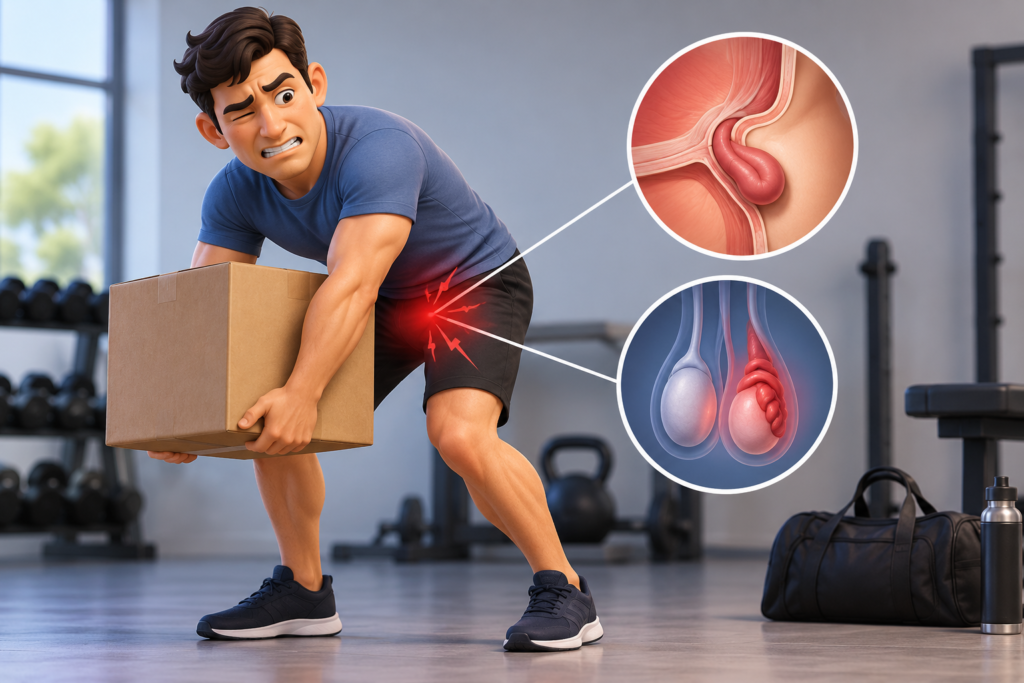
A sharp pain in the groin after lifting heavy groceries, gym weights, or moving furniture is often dismissed as a pulled muscle. While muscle strain is a common cause, sudden groin pain can sometimes signal a more serious condition, such as an inguinal hernia or a testicular emergency. Recognizing the difference is essential, as delaying treatment may lead to complications.
Why Does Groin Pain Happen After Heavy Lifting?
Heavy lifting increases pressure inside the abdomen. This pressure can strain muscles and ligaments, but it can also expose an underlying weakness in the abdominal wall or affect structures within the groin.
Common causes include:
- Muscle strain from overstretching or tearing groin muscles
- Inguinal hernia caused by tissue pushing through a weakened abdominal wall
- Testicular conditions that require prompt medical evaluation
When It May Be a Muscle Strain
A muscle strain is usually the most common explanation, especially after exercise or sudden movement.
Typical signs include:
- Pain that worsens with movement
- Tenderness over the groin muscles
- Mild swelling
- Improvement with rest over several days
However, if symptoms persist or become more severe, another cause should be considered.
Could It Be an Inguinal Hernia?
An inguinal hernia occurs when part of the intestine or fatty tissue protrudes through a weak spot in the abdominal wall.
Warning signs include:
- A noticeable bulge in the groin
- Pain that increases while lifting, coughing, or standing
- A feeling of heaviness or pressure in the groin
- Relief when lying down
Ignoring a hernia can lead to incarceration or strangulation, where the blood supply becomes compromised and emergency surgery may be required.
Don’t Ignore Testicular Pain
Sudden groin pain accompanied by testicular pain should never be ignored. One of the most urgent conditions is testicular torsion, where the spermatic cord twists and cuts off blood supply to the testicle.
Seek emergency care if you experience:
- Sudden, severe testicular pain
- Swelling of the scrotum
- Nausea or vomiting
- One testicle sitting higher than the other
Prompt treatment within a few hours offers the best chance of saving the affected testicle.
When Should You See a Urologist?
Schedule a consultation if you have:
- Groin pain lasting more than a few days
- A recurring bulge in the groin
- Pain that returns during physical activity
- Associated urinary symptoms or scrotal swelling
A urologist can perform a physical examination and recommend investigations such as an ultrasound when needed to determine the exact cause.
How Can You Reduce the Risk?
Although not every case is preventable, these measures can help lower the risk of groin injuries and related conditions:
- Lift heavy objects using proper technique
- Strengthen your core muscles gradually
- Avoid sudden increases in workout intensity
- Maintain a healthy body weight
- Address persistent cough or constipation that increases abdominal pressure
Take Groin Pain Seriously
Sudden groin pain after lifting is not always “just a strain.” While many cases improve with rest, persistent pain, a visible bulge, or sudden testicular pain should never be ignored. Early evaluation by a urologist can help identify the underlying cause and ensure timely treatment before complications develop.