
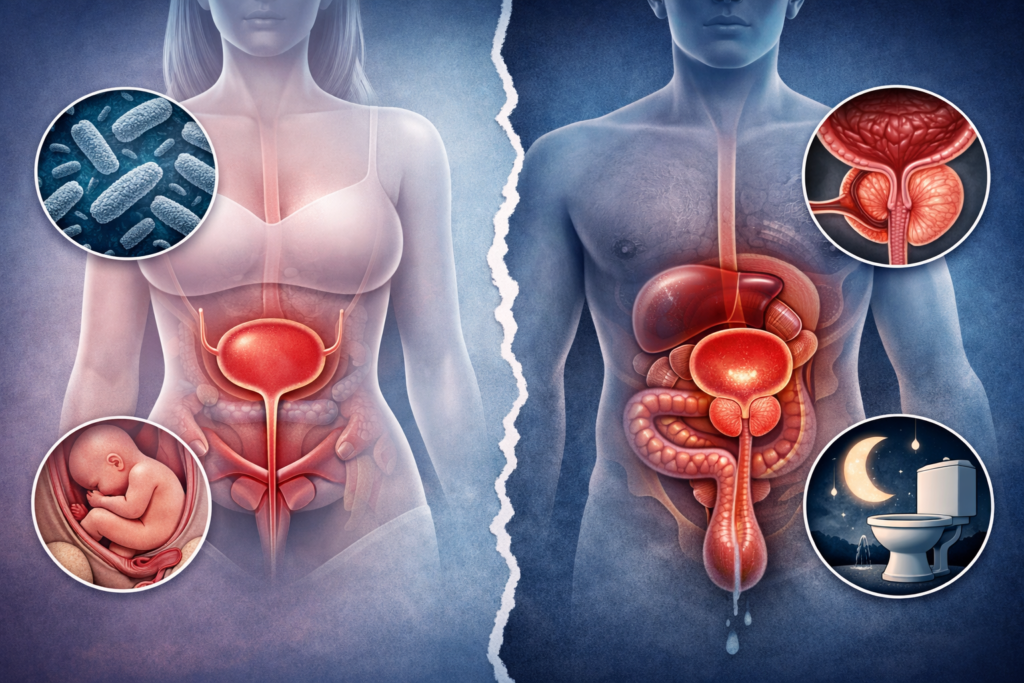
Urinary urgency—the sudden, intense need to urinate—is a common issue affecting both men and women. While the symptom may appear similar, its causes, triggers, and impact often differ between genders.
What is Urinary Urgency?
Urinary urgency is a strong, immediate need to pass urine, sometimes difficult to control. It may occur occasionally or frequently and can interfere with daily life.
Urinary Urgency in Women
Women commonly experience urgency due to:
- Urinary Tract Infections (UTIs) – More frequent due to anatomical structure
- Overactive Bladder (OAB) – Causing frequent urges even with little urine
- Hormonal Changes – Especially during menopause
- Pregnancy & Childbirth – Weakening pelvic floor muscles
These factors make women more prone to urgency and leakage issues.
Urinary Urgency in Men
In men, urgency is often linked to:
- Enlarged Prostate (BPH) – Pressing on the bladder and urethra
- Bladder Outlet Obstruction
- Nocturia – Frequent urination at night
- Incomplete Bladder Emptying
These conditions can gradually worsen if not addressed.
Key Differences
- Women are more prone to infections and pelvic floor-related issues
- Men are more affected by prostate-related conditions
- Women tend to seek treatment earlier
- Men often delay consultation, assuming it’s age-related
Why Early Attention Matters
Ignoring urgency can lead to complications and reduced quality of life. Early diagnosis allows for simpler and more effective treatment.
Treatment & Management
Depending on the cause, treatment may include:
- Lifestyle changes (fluid intake, diet control)
- Pelvic floor exercises
- Medications
- Minimally invasive procedures
The Takeaway
While urinary urgency affects both men and women, the reasons behind it differ. Understanding these differences helps in timely diagnosis and better treatment.
If you experience persistent urgency, consulting a urologist early can make all the difference in managing symptoms and improving quality of life.