
Introduction
Many people experience a few drops of urine leaking after they believe they have finished urinating. This condition, known as post-micturition dribble (PMD), is common, especially in men. While occasional dribbling is usually not a cause for concern, frequent or persistent leakage may indicate an underlying urological condition that requires medical attention.
What Is Post-Micturition Dribble?
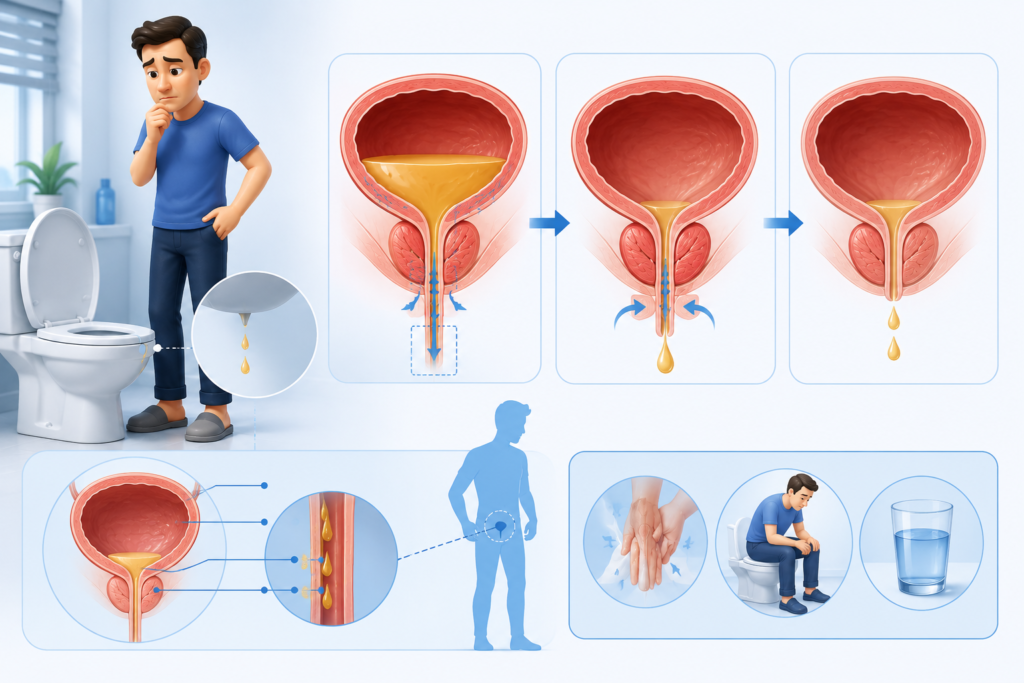
Post-micturition dribble is the involuntary leakage of urine immediately after urination, often after leaving the toilet. It occurs when a small amount of urine remains trapped in the urethra and is released later. Although it is not the same as urinary incontinence, it can be bothersome and affect confidence and daily comfort.
Common Causes
Several factors can contribute to dribbling after urination, including:
Weak Pelvic Floor Muscles
The pelvic floor muscles help push the remaining urine out of the urethra. When these muscles weaken with age or after surgery, urine may remain behind and leak afterward.
Enlarged Prostate
In men, an enlarged prostate can interfere with normal urine flow, making it difficult to empty the bladder completely.
Urethral Stricture
A narrowing of the urethra due to scarring or previous injury can disrupt urine flow and lead to post-void dribbling.
Nerve or Bladder Disorders
Conditions such as diabetes, Parkinson’s disease, or spinal cord problems can affect bladder and urinary muscle function.
When Should You See a Urologist?
You should seek medical advice if dribbling is frequent, worsening, or accompanied by symptoms such as:
- Difficulty starting urination
- Weak urine stream
- Burning or pain while passing urine
- Blood in the urine
- Frequent urination or urinary urgency
- A feeling that the bladder does not empty completely
Early diagnosis can help identify the underlying cause and prevent future complications.
Treatment Options
Treatment depends on the cause of the problem. Your urologist may recommend:
- Pelvic floor muscle (Kegel) exercises
- Simple urethral milking techniques to remove trapped urine
- Medications for an enlarged prostate
- Treatment for urethral strictures or infections
- Lifestyle modifications such as maintaining a healthy weight, reducing caffeine intake, and staying well hydrated
Most patients experience significant improvement with appropriate treatment and guidance.
Conclusion
Dribbling after urination may seem like a minor inconvenience, but it should not be ignored if it becomes persistent. A proper evaluation can identify the underlying cause and help restore normal urinary function. If you’re experiencing ongoing post-urination dribbling, consult a qualified urologist for an accurate diagnosis and personalized treatment plan. Early care can improve both your urinary health and quality of life.