
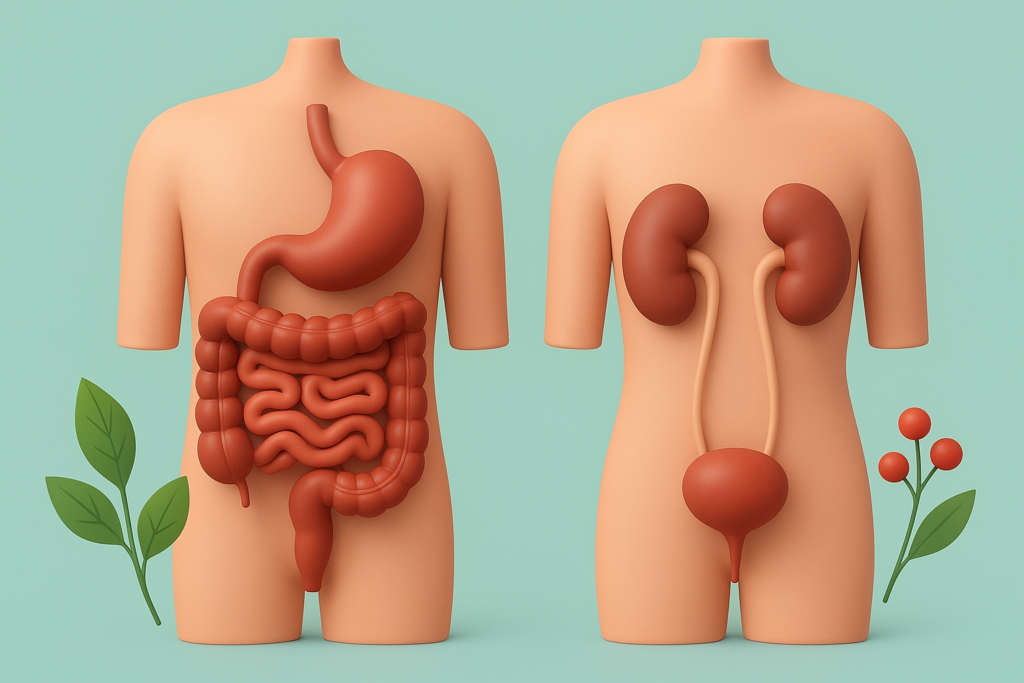
When we think about digestive health, we often focus only on the stomach or intestines. But the truth is that the choices we make in our daily diet affect much more than digestion. One of the most overlooked connections is the link between gut health and urinary tract health. What you eat can influence your risk of urinary tract infections (UTIs), bladder irritation, inflammation, and overall urinary comfort.
Understanding this connection empowers you to make dietary decisions that support both your gut and urinary system.
The Gut–Urinary Connection
The gut and urinary tract are connected through what researchers call the gut–bladder axis. This means that the balance of bacteria in your gut has a direct impact on the bacteria found in your urinary tract.
When the gut microbiome is healthy, it supports immune function and helps prevent harmful bacteria from traveling to the urinary tract. But when it becomes imbalanced (a condition called dysbiosis), it can increase the likelihood of recurrent UTIs and bladder irritation.
A balanced gut microbiome also helps regulate inflammation, which is crucial because chronic inflammation can contribute to urinary discomfort and sensitivity.
How Diet Directly Impacts Your Urinary Tract
1. Hydration and Fluid Intake
Although not technically food, proper hydration plays a major role. Drinking enough water helps flush bacteria out of the urinary tract. Diets high in salty or dehydrating foods can reduce urine flow, increasing the risk of UTIs.
2. Fiber-Rich Foods Support a Healthy Microbiome
Fiber supports digestive health and encourages the growth of beneficial gut bacteria. Whole grains, fruits, vegetables, legumes, and nuts can reduce constipation, which is important because constipation puts pressure on the bladder and can disrupt urinary function.
3. Probiotics for Gut and Urinary Harmony
Probiotic-rich foods such as yogurt, kefir, fermented vegetables, and kombucha help restore balance in the gut. Certain probiotic strains also reduce the risk of UTIs by preventing harmful bacteria from settling in the urinary tract.
4. Foods That May Irritate the Bladder
Certain foods trigger bladder discomfort in many people. Common irritants include:
- Caffeine
- Alcohol
- Spicy foods
- Citrus fruits
- Artificial sweeteners
- Carbonated beverages
These do not affect everyone equally, but individuals with sensitive urinary tracts often notice increased urgency or burning after consuming them.
5. Sugar and Processed Foods Increase Infection Risk
Excessive sugar feeds harmful bacteria in the gut, promoting imbalance and inflammation. Diets high in sugary drinks, refined carbs, and processed snacks may increase susceptibility to UTIs.
6. Antioxidant-Rich Foods Reduce Inflammation
Berries, leafy greens, olive oil, turmeric, and green tea contain antioxidants that support immune health and reduce inflammation in both the gut and urinary tract.
7. Cranberries and Their Role
Cranberries do not cure UTIs but may help prevent them. Compounds in cranberries can reduce the ability of harmful bacteria to attach to the urinary tract lining. They work best as a preventive measure rather than a treatment.
Special Considerations for Women
Women experience UTIs more frequently because of anatomical differences. For them, maintaining a healthy gut microbiome through diet is especially important. Hormonal changes during menstrual cycles, pregnancy, and menopause can also influence both gut health and urinary tract function.
Building a Diet That Supports Both Systems
To promote a healthy gut and urinary tract, consider incorporating the following habits:
- Drink adequate water throughout the day.
- Include high-fiber foods in daily meals.
- Add natural probiotics or fermented foods regularly.
- Limit sugary and highly processed foods.
- Pay attention to foods that trigger urinary discomfort.
- Incorporate anti-inflammatory foods and spices.
Small dietary adjustments can significantly improve overall comfort and reduce the frequency of urinary issues.
When to Seek Medical Advice
While diet plays an important role in maintaining urinary health, persistent symptoms such as burning, frequent urination, cloudy urine, or pelvic pain should never be ignored. These may indicate an infection or other medical condition that requires a urologist evaluation.
Conclusion
Your gut and urinary tract are deeply interconnected, and your daily eating habits influence both. By choosing foods that support a healthy microbiome, reducing bladder irritants, and maintaining proper hydration, you can improve digestive health while reducing the risk of urinary discomfort and infections. A thoughtful, balanced diet strengthens not just your gut but your entire system—including your urinary tract.