
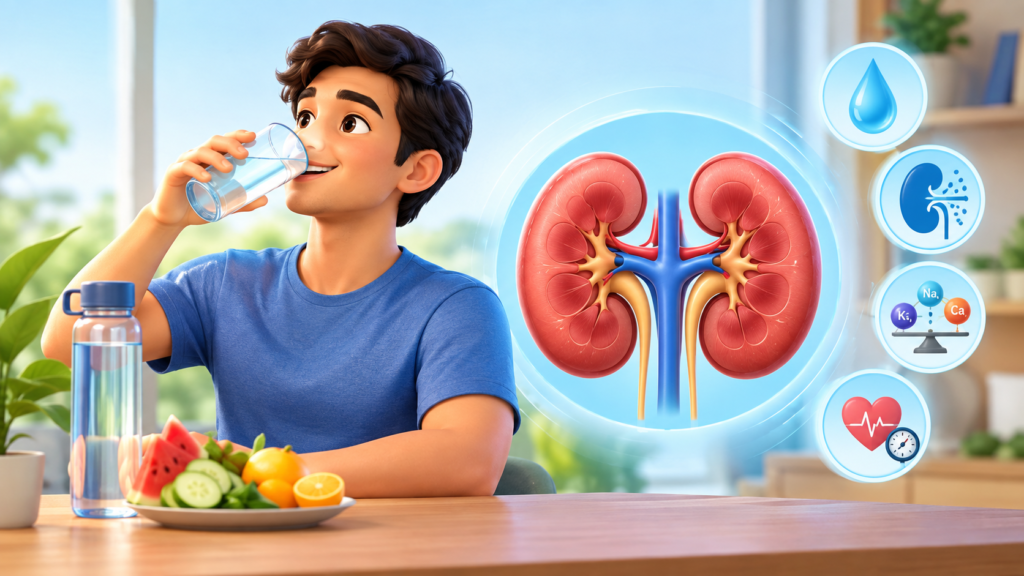
“Waiting until you’re thirsty is already late.”
Your kidneys work around the clock to filter waste, balance fluids, regulate minerals, and support healthy blood pressure. Yet many people treat hydration as something to catch up on after feeling thirsty. The reality is that thirst is often a sign your body has already started conserving water.
Clear urine is not the ultimate goal. Consistent hydration throughout the day is what helps your kidneys function at their best.
Why Consistent Hydration Matters
Every day, your kidneys filter around 150–180 liters of fluid, removing waste while keeping the right amount of water and essential minerals in your body. When water intake drops, the kidneys work harder to concentrate urine and preserve fluids.
Over time, repeated dehydration may increase the risk of problems such as:
- Kidney stones
- Urinary tract infections (UTIs)
- Reduced kidney efficiency in vulnerable individuals
- Difficulty maintaining healthy fluid balance
A steady hydration routine supports these vital processes without putting unnecessary stress on your kidneys.
Why Thirst Isn’t the Best Reminder
Relying only on thirst can be misleading, especially if you’re:
- Busy at work
- Exercising
- Spending time in hot weather
- Older, as thirst sensation may become less noticeable with age
Instead of waiting for thirst, build hydration into your daily routine.
Signs You May Need More Water
Your body often gives subtle clues before dehydration becomes severe.
Watch for:
- Dark yellow urine
- Dry mouth
- Fatigue
- Headaches
- Feeling dizzy
- Infrequent urination
These signs don’t always mean there’s a kidney problem, but they can indicate that your body needs more fluids.
Simple Habits That Support Kidney Health
Rather than drinking a large amount of water at once, aim for consistent intake throughout the day.
Try these habits:
- Drink a glass of water after waking up.
- Keep a reusable water bottle nearby.
- Sip water between meals.
- Increase fluids during exercise or hot weather.
- Include water-rich foods like cucumber, watermelon, oranges, and tomatoes.
Small habits repeated daily are more effective than occasional “hydration binges.”
Can You Drink Too Much Water?
Yes. Drinking excessive amounts of water in a short period can dilute sodium levels in the blood, a condition called hyponatremia. Most healthy adults should focus on drinking according to their daily needs, activity level, climate, and medical conditions rather than forcing excessive intake.
If you have kidney disease, heart failure, or have been advised to restrict fluids, always follow your doctor’s recommendations.
When to See a Urologist
Persistent urinary symptoms shouldn’t be ignored. Consult a urologist if you experience:
- Pain while urinating
- Blood in urine
- Frequent kidney stones
- Difficulty passing urine
- Persistent flank or lower back pain
The Takeaway
Healthy kidneys don’t depend on occasional bursts of water—they benefit from consistent hydration every single day. Instead of chasing perfectly clear urine, focus on creating a sustainable routine that keeps your body supported from morning to night. Your kidneys quietly work for you every day; giving them steady hydration is one of the simplest ways to return the favor.