
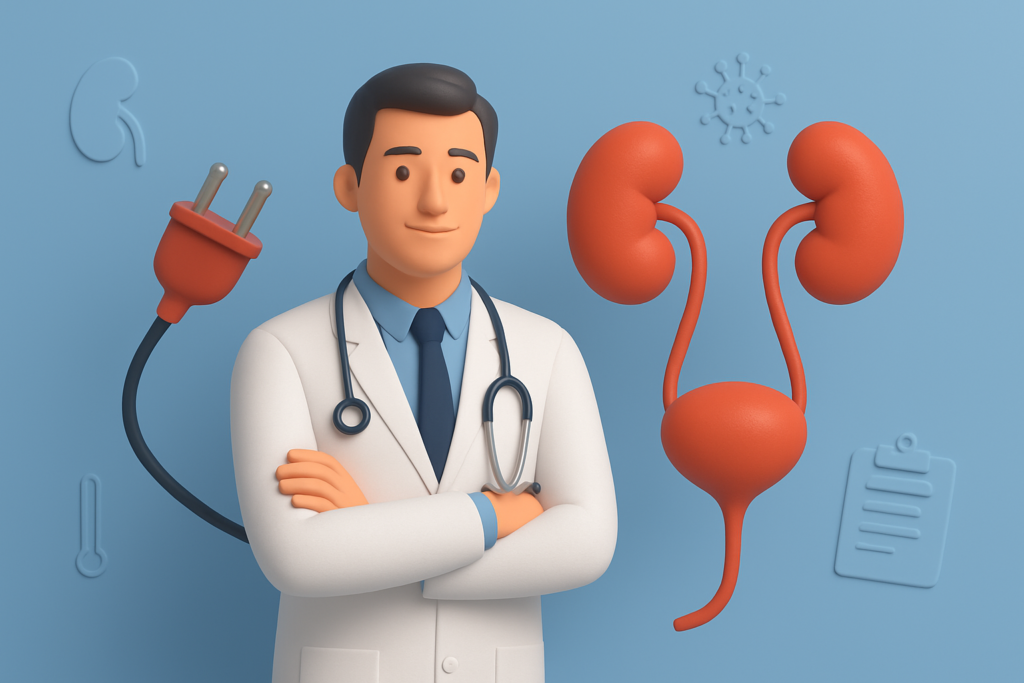
When people hear the word urology, they often think it’s only about men—or only about kidney stones. But urology is a vast and vital medical field that affects everyone, from children to seniors, men and women alike. Unfortunately, myths, embarrassment, and lack of awareness often keep people from getting the care they need.
This blog pulls back the curtain on the world of urology—sharing what urologists wish everyone knew.
1. Urology Isn’t Just for Men
A common misconception is that urologists are “the male doctors.”
In reality, urology deals with the urinary system in both men and women, and the reproductive system in men.
Urologists regularly treat:
- Women with urinary tract infections (UTIs), incontinence, kidney stones, or bladder issues
- Men with prostate, testicular, bladder, or urinary concerns
- Children with congenital urinary conditions
If it involves the kidneys, bladder, ureters, urethra—or male reproductive organs—urology is the destination.
2. UTIs Are Common—But Shouldn’t Be Ignored
Nearly every woman has faced a UTI at some point. Men get them too, though less frequently.
Urologists wish people knew:
- Recurrent UTIs are not normal
- Overusing antibiotics without proper evaluation can worsen future infections
- Some conditions (like kidney stones or bladder dysfunction) can cause repeated infections
- Hydration, hygiene, and early treatment can significantly reduce risk
A UTI may be small, but its complications—if ignored—are not.
3. Men: Don’t Fear the Prostate Exam
For many men, “the prostate exam” is a dreaded topic. But in truth:
- It’s quick
- It’s painless
- It saves lives
Prostate cancer is one of the most common cancers in men—but also one of the most treatable when caught early. Early screening is especially important after age 50, or earlier for high-risk groups.
Avoiding the exam does more harm than good.
4. Erectile Dysfunction Is More Common Than You Think
Erectile dysfunction (ED) isn’t a “failure”—it’s often a symptom.
Urologists say ED can signal:
- heart disease
- diabetes
- nerve disorders
- hormonal imbalances
- stress or lifestyle issues
The good news?
ED is treatable. Modern treatments range from medications to hormone therapy to advanced options like shockwave therapy and surgical implants.
Silence may be common, but solutions are everywhere.
5. Kidney Stones Are Often Preventable
Anyone who has had a kidney stone knows the pain is unforgettable.
But many people don’t realize how preventable stones are.
Urologists recommend:
- Drinking enough water
- Reducing salt
- Maintaining balanced calcium intake
- Limiting excessive animal protein
- Avoiding overconsumption of oxalates (like too many nuts or spinach)
Once you’ve had one stone, your risk of another increases—so prevention matters.
6. Incontinence Is Not “Just Ageing”
Many adults—especially women—accept urinary leakage as inevitable after childbirth or aging.
But urologists insist: you don’t have to live with it.
Modern treatments include:
- pelvic floor therapy
- medications
- minimally invasive procedures
- sling surgeries
- lifestyle modifications
Embarrassment keeps many people from seeking help, but treatment success rates are high.
7. Blood in Urine Is Always a Red Flag
Even a single episode of blood in the urine deserves medical attention.
Possible causes include:
- infection
- stones
- inflammation
- kidney issues
- bladder or kidney cancer
Never ignore this symptom—it’s one urologists want people to take seriously.
8. Hydration Is the Silent Hero of Urology
One of the simplest, most underrated health habits is staying hydrated.
Good hydration:
- prevents stones
- reduces UTIs
- supports kidney health
- improves bladder function
A urologist’s favorite advice?
If your urine is consistently dark yellow, you’re not drinking enough.
9. Early Consultation Beats Late Complications
Urologists see severe cases—blocked kidneys, advanced cancers, uncontrolled infections—that could have been prevented with early intervention.
Key message:
Don’t wait.
If something feels off—pain, burning, leakage, difficulty urinating—get checked early.
Early action saves kidneys, preserves fertility, improves quality of life, and sometimes saves lives.
Final Thoughts
Urology isn’t just a medical specialty—it’s a cornerstone of lifelong health.
By shedding stigma, knowing the warning signs, and getting timely care, you can protect two of the body’s most essential systems: urinary and reproductive health.
Urology unplugged means understanding your body better—and taking charge of your wellbeing.