
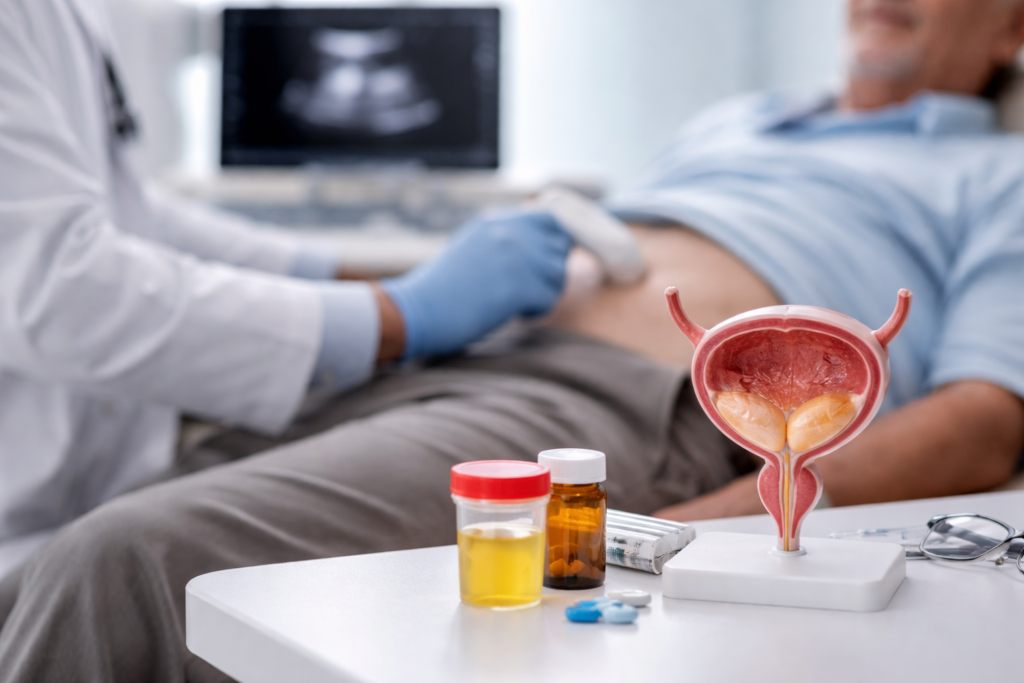
When people think about bladder problems, they usually think of urgency, frequent urination, or incontinence. These symptoms are commonly associated with overactive bladder. However, there is another condition that is far less understood, frequently overlooked, and often misdiagnosed — Underactive Bladder (UAB).
Underactive bladder is a condition characterized by reduced bladder muscle activity, leading to incomplete bladder emptying, difficulty initiating urination, or the need to strain while voiding. Because its symptoms overlap with several other urological and neurological disorders, UAB remains one of the most misdiagnosed conditions in urology.
What Is Underactive Bladder?
Underactive bladder is defined as a condition in which the bladder muscle (detrusor muscle) does not contract adequately during urination. As a result, the bladder cannot empty fully or empties very slowly.
Clinically, UAB is associated with:
- Weak or slow urinary stream
- Hesitancy or delay in starting urination
- Straining to void
- Feeling of incomplete bladder emptying
- Increased post-void residual urine
- Recurrent urinary tract infections due to retained urine
Unlike overactive bladder, which causes urgency and frequent urination, underactive bladder is primarily a problem of insufficient bladder contraction.
Why Is It So Often Misdiagnosed?
Underactive bladder is frequently confused with other conditions such as:
- Bladder outlet obstruction (for example, enlarged prostate in men)
- Overactive bladder
- Urinary retention due to neurological disorders
- Age-related urinary changes
- Psychogenic voiding dysfunction
The reason for misdiagnosis is that patients may present with urinary frequency, nocturia, or incomplete emptying — symptoms that can overlap with both overactive bladder and obstruction. Without proper diagnostic testing, especially urodynamic studies, clinicians may treat the patient for the wrong condition.
This often leads to ineffective treatment, prolonged symptoms, and patient frustration.
Causes of Underactive Bladder
Underactive bladder can result from multiple factors, including:
- Aging-related decline in detrusor muscle function
- Diabetes-induced neuropathy
- Spinal cord injury or neurological diseases such as Parkinson’s disease or multiple sclerosis
- Pelvic surgery that affects bladder nerves
- Chronic bladder overdistension
- Long-term bladder outlet obstruction leading to muscle fatigue
In many patients, the cause is multifactorial, making diagnosis even more challenging.
How Is Underactive Bladder Diagnosed?
The gold standard for diagnosing underactive bladder is urodynamic testing, which evaluates bladder pressure, capacity, and contractility during filling and voiding.
Other diagnostic tools include:
- Post-void residual urine measurement using ultrasound
- Uroflowmetry to assess urine flow rate
- Cystoscopy in selected cases
- Neurological evaluation when indicated
A careful history and physical examination are essential, but objective testing is often required to distinguish UAB from other urinary disorders.
Treatment Options
Treatment focuses on improving bladder emptying and preventing complications such as infections or kidney damage.
Management strategies may include:
- Behavioral techniques such as timed voiding and double voiding
- Intermittent self-catheterization in cases of significant retention
- Treatment of underlying conditions such as diabetes or neurological disease
- Avoidance of medications that worsen bladder contractility
- In selected cases, neuromodulation or experimental therapies
Unlike overactive bladder, there are currently limited medications that reliably improve detrusor muscle contractility.
Why Awareness Matters
Because underactive bladder is under-recognized, many patients go untreated or are treated incorrectly for years. Misdiagnosis can lead to unnecessary medications, worsening symptoms, recurrent infections, and decreased quality of life.
Greater awareness among clinicians and patients is essential. Early recognition and proper diagnostic testing can significantly improve outcomes and prevent long-term complications.
Conclusion
Underactive bladder is a common yet frequently overlooked condition that deserves greater attention in clinical practice. By understanding its symptoms, causes, and diagnostic challenges, healthcare providers can reduce misdiagnosis and offer more effective, patient-centered care.
Recognizing underactive bladder is not just about treating urinary symptoms — it is about restoring comfort, dignity, and quality of life for patients who have often been misunderstood for far too long.