
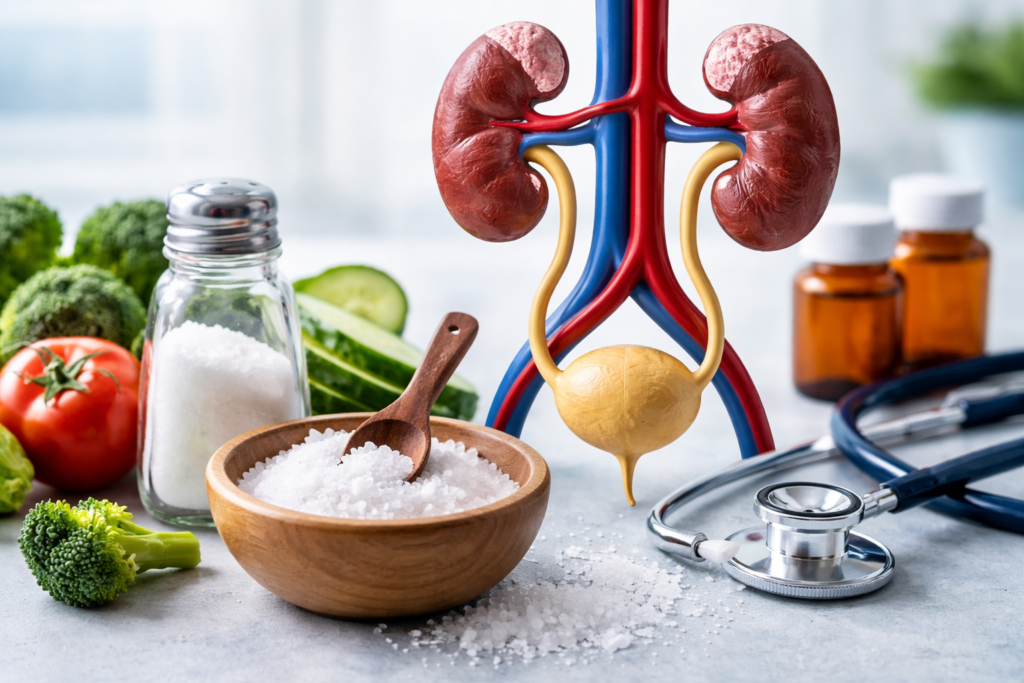
Most people know that eating too much salt is bad for the heart — but far fewer realize how strongly sodium affects the urinary system. From kidney stones and urinary infections to bladder irritation and high blood pressure damaging the kidneys, salt plays a surprisingly powerful role in urology.
Let’s explore how sodium quietly influences your kidneys, bladder, and urinary health — and what you can do about it.
1. The Kidney–Salt Connection
Your kidneys are the body’s main regulators of sodium and water balance. Every day, they filter about 180 liters of blood, carefully deciding how much sodium to keep and how much to excrete in urine.
When sodium intake is high:
- The kidneys must work harder to excrete excess salt
- More calcium is lost in urine
- Urine becomes more concentrated and irritating
- Blood pressure rises, damaging kidney filters over time
Over years, this strain can contribute to chronic kidney disease (CKD), kidney stones, and protein leakage into urine.
2. Salt and Kidney Stones: A Strong Link
High sodium intake is one of the most important dietary risk factors for kidney stones.
Why?
- Sodium increases calcium excretion in urine.
- High urinary calcium promotes calcium oxalate and calcium phosphate stone formation.
- Salt also reduces urinary citrate, a natural stone inhibitor.
📌 Result: The higher your salt intake, the higher your stone risk — even if your calcium intake is normal.
3. Sodium and Urinary Tract Irritation
Excess salt can make urine more concentrated and acidic, which can:
- Irritate the bladder lining
- Worsen urinary urgency and frequency
- Exacerbate conditions like overactive bladder and interstitial cystitis
- Increase burning sensations during urination
Many patients with chronic urinary symptoms improve simply by reducing sodium.
4. Blood Pressure, Salt, and Kidney Damage
High salt intake raises blood pressure, and high blood pressure is the second leading cause of kidney failure worldwide.
Elevated pressure damages the delicate filtering units (glomeruli) inside the kidneys, leading to:
- Protein leakage into urine (proteinuria)
- Progressive kidney scarring
- Eventual loss of kidney function
This creates a vicious cycle: kidney damage worsens blood pressure control, and high blood pressure worsens kidney damage.
5. Salt and Urinary Infections
While salt does not directly cause urinary tract infections (UTIs), high sodium intake can:
- Reduce overall hydration if it increases thirst without sufficient water intake
- Concentrate urine, making it easier for bacteria to adhere to the urinary tract lining
- Reduce the natural flushing effect of frequent urination
Proper hydration with lower sodium helps maintain a urinary environment that resists infection.
6. How Much Sodium Is Too Much?
Recommended sodium intake:
- < 2,300 mg/day for most adults
- < 1,500 mg/day for those with kidney disease, stones, or hypertension
However, the average person consumes over 3,400 mg/day, mostly from processed foods.
High-salt foods include:
- Packaged snacks
- Fast food
- Pickles and sauces
- Processed meats
- Instant noodles and soups
7. Urologist-Approved Tips to Reduce Sodium
- Cook more at home using fresh ingredients
- Read food labels — aim for “low sodium” (<140 mg/serving)
- Replace salt with herbs, lemon, garlic, and spices
- Avoid adding table salt automatically
- Drink enough water to keep urine pale yellow
- Balance sodium with potassium-rich foods (fruits, vegetables)
Conclusion
Salt may seem harmless, but in excess it quietly reshapes your urinary system — increasing the risk of stones, kidney disease, bladder irritation, and infections. The kidneys are resilient, but they are not invincible.
Reducing sodium is one of the simplest, most powerful ways to protect your urinary health — and your heart at the same time.
Small dietary changes today can prevent major urological problems tomorrow.