
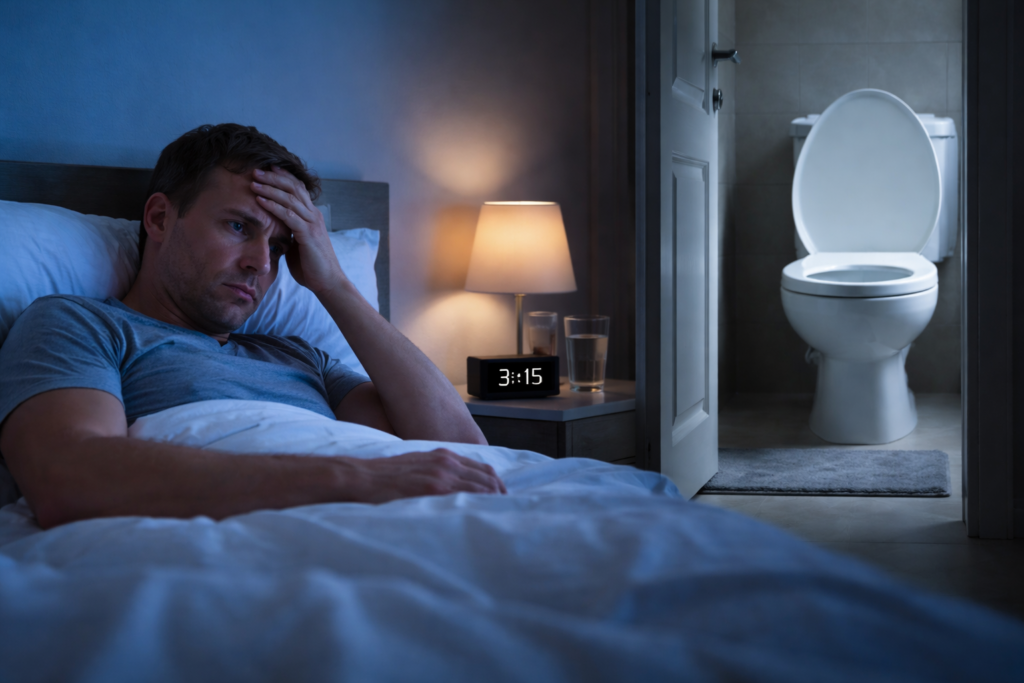
Sleep and bladder health are more connected than most people realize. When sleep is disturbed, bladder function often suffers — and when bladder symptoms increase, sleep becomes even harder to maintain. This creates a cycle known as the sleep–bladder loop, where each problem reinforces the other.
Understanding this relationship is important for anyone dealing with frequent nighttime urination, urgency, or poor sleep quality.
How Poor Sleep Affects the Bladder
During healthy sleep, the body releases hormones that reduce urine production at night and allow the bladder to rest. Poor or fragmented sleep disrupts this process.
Lack of deep sleep can:
- Increase nighttime urine production (nocturnal polyuria)
- Heighten bladder sensitivity, making you feel the urge to urinate sooner
- Reduce the brain’s ability to suppress unnecessary bladder signals
As a result, even small amounts of urine can feel urgent, waking you multiple times through the night.
How Bladder Symptoms Disrupt Sleep
Bladder conditions such as overactive bladder (OAB), benign prostatic enlargement (in men), interstitial cystitis, or urinary tract infections can cause:
- Frequent urination at night (nocturia)
- Sudden urgency
- Discomfort or pelvic pressure
Each awakening interrupts the sleep cycle, reducing time spent in deep and REM sleep — the stages essential for physical repair, hormone balance, and nervous system regulation.
Over time, this leads to daytime fatigue, irritability, reduced concentration, and even weakened immunity.
The Vicious Cycle
Poor sleep increases stress hormones like cortisol, which can worsen inflammation and nerve sensitivity in the bladder. A sensitive bladder then creates more nighttime awakenings, further reducing sleep quality.
This loop can become self-sustaining unless both sides — sleep and bladder health — are addressed together.
Breaking the Sleep–Bladder Loop
Improving this cycle requires a combined approach:
- Limit evening fluids, especially caffeine and alcohol
- Follow good sleep hygiene: consistent bedtime, dark and quiet room, limited screen use before bed
- Bladder training or pelvic floor therapy when appropriate
- Medical evaluation for persistent nocturia, urgency, or discomfort
- Stress management, as anxiety and hypervigilance worsen bladder sensitivity
Conclusion
Sleep and bladder function are deeply intertwined. Treating one without addressing the other often leads to incomplete relief. If you are experiencing frequent nighttime urination, urgency, or unrefreshing sleep, consulting a healthcare professional can help identify the underlying cause and restore balance.
Better sleep supports a calmer bladder — and a calmer bladder supports better sleep. Addressing both can significantly improve quality of life.