
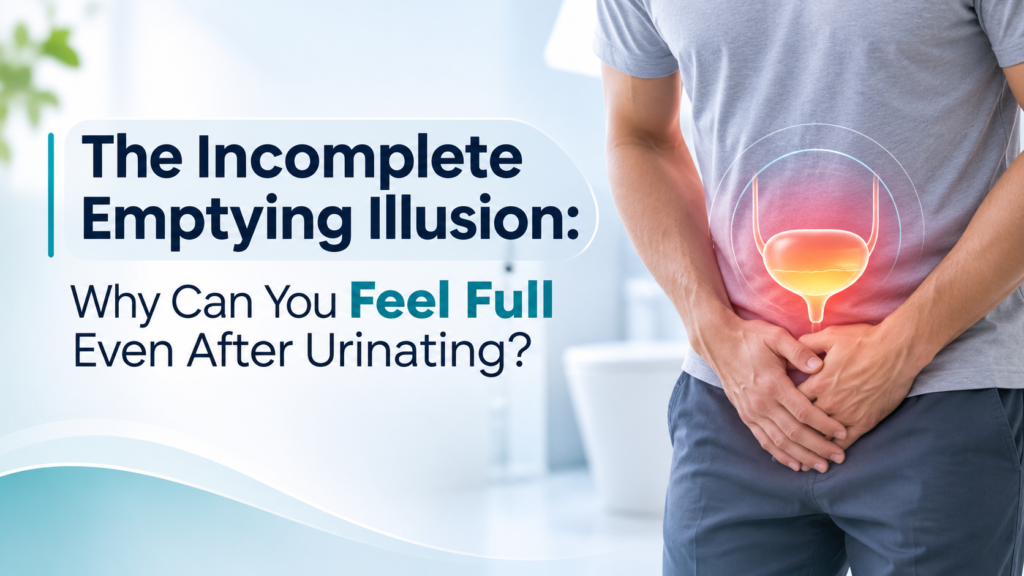
Have you ever finished urinating, stepped away from the bathroom, and still felt as though your bladder was not completely empty? That lingering sensation can be confusing and uncomfortable. Often described as the feeling of incomplete bladder emptying, it may indicate an underlying urinary concern that deserves attention.
Why Does This Sensation Occur?
Ideally, the bladder contracts to release urine and then relaxes once it is sufficiently empty. However, certain conditions can interfere with this process, creating the sensation that urine remains inside even after urination.
Some common causes include:
1. Enlarged Prostate: In men, benign prostatic enlargement can narrow the urinary passage, making it difficult for the bladder to empty completely. It may also cause a weak stream, hesitancy and frequent nighttime urination.
2. Urinary Tract Infection (UTI): Inflammation and irritation of the bladder can create a persistent urge to urinate, even when very little urine is present.
3. Overactive Bladder: An overactive bladder can produce frequent and sudden urges to urinate. The sensation of fullness may continue even after passing urine.
4. Weak Bladder Muscles: If the bladder muscles cannot contract effectively, some urine may remain after urination. This is known as urinary retention.
5. Pelvic Floor Dysfunction: Difficulty relaxing the pelvic floor muscles can interfere with normal urine flow and bladder emptying.
Is It Just a Passing Sensation?
Not necessarily. Occasionally experiencing this feeling may not indicate a serious problem. However, if it happens repeatedly, it should not be ignored.
Persistent incomplete emptying can sometimes lead to urinary retention, recurrent infections and discomfort. In certain cases, prolonged retention may affect bladder and kidney health.
How Is It Diagnosed?
A urologist may recommend a few investigations depending on your symptoms and medical history:
- Urine Test: To identify possible infection or other abnormalities.
- Ultrasound: To assess the bladder and measure post-void residual (PVR), the urine left behind after urination.
- Uroflowmetry: To evaluate the speed and pattern of urine flow.
- Additional Evaluation: Prostate assessment or other tests when clinically indicated.
Listen to What Your Bladder Is Telling You
A persistent feeling of incomplete bladder emptying is not something to dismiss as normal ageing or simply drinking too much water. Seek medical advice if symptoms continue. Inability to urinate, severe lower abdominal pain, fever or blood in the urine requires prompt medical assessment.
Understanding the cause is the first step towards appropriate treatment. Your bladder health deserves attention, not guesswork.