
Introduction
The human body functions as an interconnected system, yet we often think of organs in isolation. The bladder and the gut are a perfect example of two systems that are deeply linked. Though they serve different purposes—one for waste elimination through urine and the other for digestion—they constantly communicate and influence each other. Understanding this connection can help explain several common health issues and guide better overall care.
The Shared Anatomy and Nerve Network
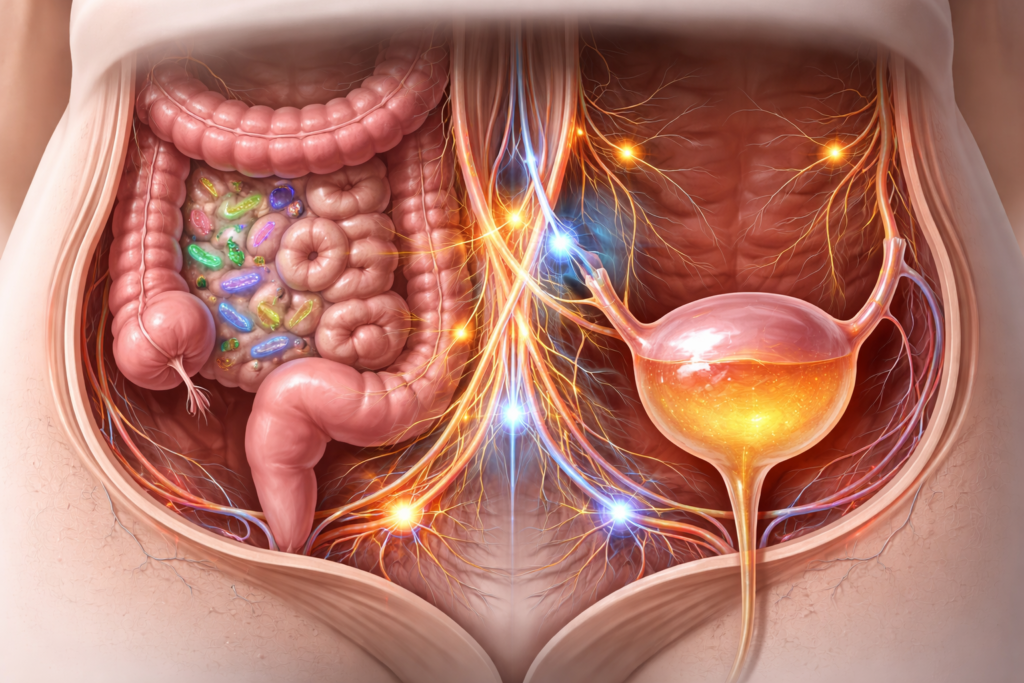
The bladder and intestines are located close together in the pelvic region. This proximity allows them to share muscles, space, and an important network of nerves known as the pelvic nerve plexus. These nerves transmit signals between the organs, enabling coordination but also allowing problems in one organ to affect the other.
How the Gut Affects the Bladder
One of the clearest examples of this relationship is seen in constipation. When the bowel becomes full, it puts pressure on the bladder. This can:
- Reduce bladder capacity
- Cause frequent urination
- Create a sense of urgency
- Interfere with complete bladder emptying
This connection is particularly common in children but can affect adults as well. Chronic constipation is often an overlooked cause of urinary symptoms.
How the Bladder Affects the Gut
The influence works both ways. Bladder issues such as infections or irritation can lead to changes in bowel habits. For example:
- Discomfort may cause tightening of pelvic muscles
- This tension can make bowel movements difficult
- Over time, it may lead to constipation or incomplete evacuation
Thus, treating bladder symptoms alone may not resolve the underlying issue if the gut is also involved.
The Role of Pelvic Floor Muscles
The pelvic floor muscles support both the bladder and rectum. They play a key role in controlling urination and bowel movements. When these muscles are not functioning properly, it can lead to:
- Urinary urgency or leakage
- Constipation
- Difficulty in passing stool
Pelvic floor dysfunction often presents with combined symptoms, highlighting the shared control system of these organs.
The Gut Microbiome Connection
Recent research suggests that the gut microbiome may indirectly affect bladder health. An imbalance of bacteria in the gut can lead to inflammation, which may impact nearby organs, including the bladder. This may explain why some individuals experience both digestive problems and urinary discomfort simultaneously.
The Impact of Stress
Stress plays a significant role in both gut and bladder function. The gut is highly sensitive to emotional changes, and stress can:
- Disrupt digestion
- Trigger constipation or diarrhea
- Increase urinary urgency and frequency
This creates a cycle where both systems become more reactive and sensitive.
Maintaining a Healthy Bladder–Gut Balance
To support both systems, a holistic approach is essential:
- Stay hydrated: Helps both digestion and bladder function
- Eat a fiber-rich diet: Prevents constipation
- Exercise regularly: Promotes healthy bowel movements
- Practice pelvic floor exercises: Improves muscle coordination
- Manage stress: Reduces overactivity in both systems
Conclusion
The bladder and gut are in constant communication, influencing each other more than we might expect. When one system is disturbed, the other often follows. Recognizing this connection allows for a more comprehensive approach to health. Instead of treating symptoms in isolation, addressing both organs together can lead to more effective and lasting relief.