
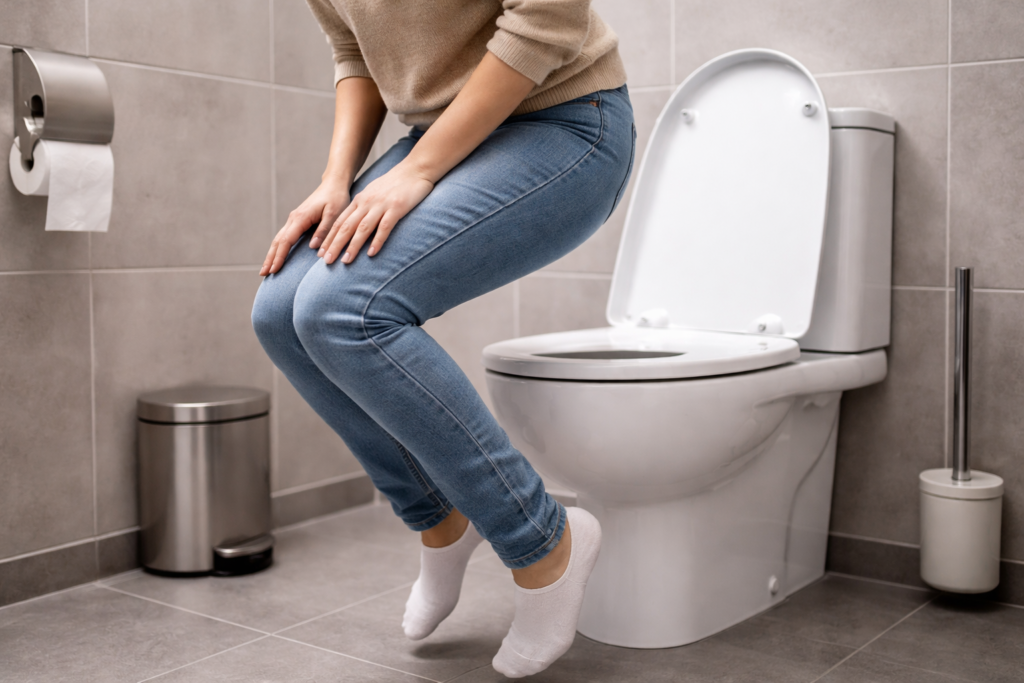
Public restrooms often make people uneasy. To avoid contact with toilet seats, many adopt the habit of “hovering” while urinating—never fully sitting down. While this may feel cleaner or safer, urologists are increasingly seeing how this common habit can quietly affect urinary health.
So, is hovering actually helpful? Or could it be doing more harm than good?
Why Do People Hover?
The main reason is hygiene anxiety. Many believe toilet seats are a major source of infection. In reality, most urinary tract infections (UTIs) are caused by bacteria from our own gut flora—not from toilet seats. Intact skin on the thighs and buttocks is an effective barrier, making disease transmission from toilet seats extremely unlikely.
What Happens to the Body When You Hover?
From a urology standpoint, proper urination depends on muscle relaxation—especially the pelvic floor muscles.
When you hover:
- Pelvic floor muscles stay partially contracted
- The bladder cannot empty completely
- Urine flow may be weaker or interrupted
This incomplete relaxation changes how the bladder functions over time.
Potential Urological Problems Linked to Hovering
Hovering occasionally is not dangerous. But making it a regular habit can contribute to:
1. Incomplete Bladder Emptying
Residual urine left in the bladder can increase the risk of:
- Urinary tract infections
- Bladder irritation
- Frequent urge to urinate
2. Pelvic Floor Dysfunction
Constantly urinating with tense muscles can train the body incorrectly, leading to:
- Difficulty starting urination
- A feeling of incomplete voiding
- Pelvic discomfort
3. Increased Urinary Frequency
When the bladder never empties fully, it fills faster—causing repeated bathroom trips.
4. Straining Habits
Hovering may encourage pushing or straining, which over time can stress pelvic muscles and worsen bladder control issues.
What Do Urologists Recommend?
From a medical perspective, the best position for urination is sitting comfortably and fully relaxed.
Practical tips:
- Sit fully on the seat when possible
- Line the seat with toilet paper if it helps you feel more comfortable
- Avoid rushing—give the bladder time to empty completely
- Do not strain or push urine out
For those with ongoing urinary symptoms—burning, urgency, frequent UTIs, or difficulty emptying—reviewing toilet habits is an important part of evaluation.
When Should You Be Concerned?
Consider consulting a urologist if you experience:
- Recurrent UTIs
- Persistent feeling of incomplete emptying
- Weak urine stream
- Pelvic pain or pressure
- Frequent urination without increased fluid intake
These symptoms are often multifactorial, but improper voiding habits can be a contributing factor.
The Bottom Line
Hovering over toilets may feel like a protective habit, but from a urology standpoint, it’s not ideal for long-term bladder health. Sitting properly allows natural muscle relaxation and complete bladder emptying—key factors in preventing urinary problems.
Sometimes, good health comes down to simple habits done the right way.