
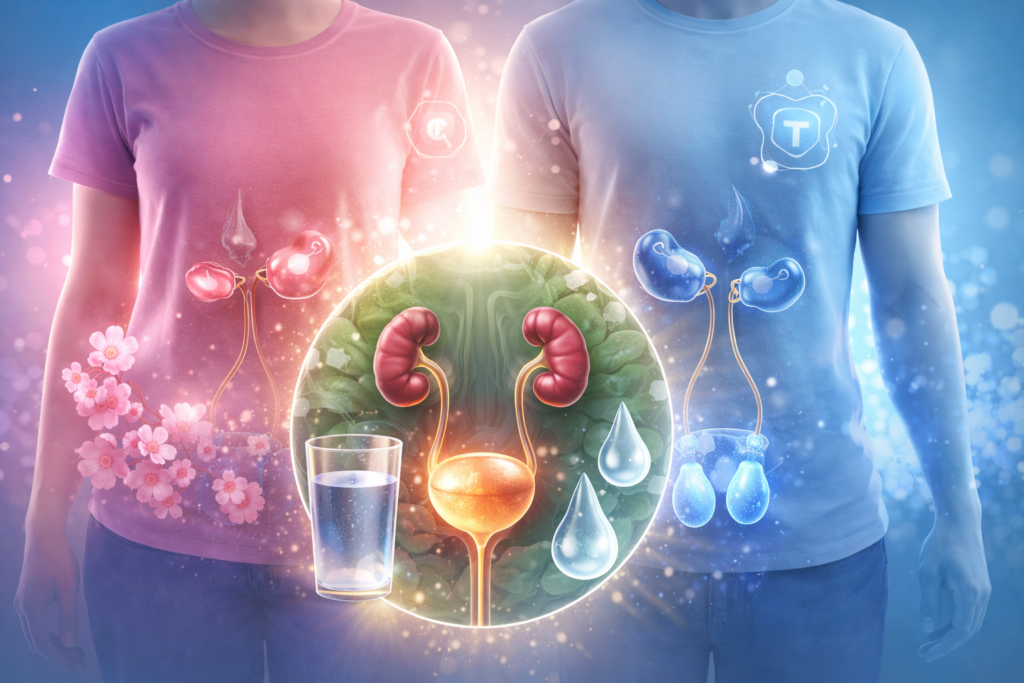
Urinary control is something many of us take for granted—until it changes. While hydration habits, aging, and lifestyle all play a role, hormones are often the quiet influencers behind bladder health. Two key players, estrogen and testosterone, have a surprisingly strong impact on how well the urinary system functions in both women and men.
Understanding this connection can help explain common issues like urgency, leakage, or frequent urination, and point toward better prevention and management.
The Basics: Hormones and the Urinary System
The urinary system includes the bladder, urethra, pelvic floor muscles, and the nerves that coordinate them. Hormones interact with all of these components. They influence muscle strength, tissue elasticity, blood flow, and nerve signaling—factors that are essential for holding and releasing urine appropriately.
When hormone levels are balanced, the system works smoothly. When they fluctuate or decline, urinary control can be affected.
Estrogen: A Key Protector of Bladder Health
Estrogen plays a crucial role in maintaining the health of the lower urinary tract, especially in women. Estrogen receptors are found in the bladder, urethra, and pelvic floor muscles.
Adequate estrogen levels help:
- Keep the lining of the urethra thick and elastic
- Maintain strong pelvic floor muscles
- Support healthy blood flow and nerve sensitivity
When estrogen levels drop—most commonly during menopause, postpartum periods, or after certain medical treatments—the tissues of the urinary tract can become thinner and weaker. This may lead to symptoms such as:
- Urinary urgency or frequency
- Stress incontinence (leakage when coughing, sneezing, or exercising)
- Increased risk of urinary tract infections
This is why urinary symptoms often increase after menopause. In some cases, localized estrogen therapy (under medical guidance) can significantly improve bladder control.
Testosterone: Supporting Strength and Control
Testosterone is often associated with muscle mass and strength, and that includes the muscles involved in urinary control. While it is more abundant in men, women also produce small amounts that contribute to pelvic floor health.
In men, testosterone helps:
- Maintain muscle tone in the pelvic floor
- Support nerve signaling involved in bladder control
Low testosterone levels—due to aging, chronic illness, or certain treatments—may contribute to:
- Weaker urinary control
- Increased nighttime urination
- Reduced bladder capacity
In men, urinary symptoms are often blamed solely on prostate enlargement, but declining testosterone can also be part of the picture.
Hydration, Hormones, and Balance
Hydration interacts closely with hormonal effects. Both dehydration and excessive fluid intake can worsen urinary symptoms, especially when hormone levels are low.
- Dehydration can irritate the bladder lining, increasing urgency
- Overhydration, particularly late in the day, can overwhelm weakened bladder control
Hormonal changes can also alter how the kidneys regulate fluids, making it even more important to hydrate consistently throughout the day rather than in large amounts at once.
Supporting Urinary Control Through Hormonal Awareness
While hormonal changes are a natural part of life, their impact on urinary control can often be reduced through proactive care:
- Pelvic floor exercises to strengthen muscles
- Balanced hydration habits
- Maintaining healthy weight and muscle mass
- Discussing hormonal symptoms with a healthcare provider
Urinary issues are not simply an inevitable part of aging—they’re often a signal of deeper physiological shifts.
The Takeaway
Estrogen and testosterone quietly shape the strength, sensitivity, and coordination of the urinary system. When these hormones decline or fluctuate, bladder control can be affected in ways that are both physical and disruptive to daily life. By understanding the hormone–hydration connection, individuals can take informed steps to protect urinary health and improve quality of life at every stage.