
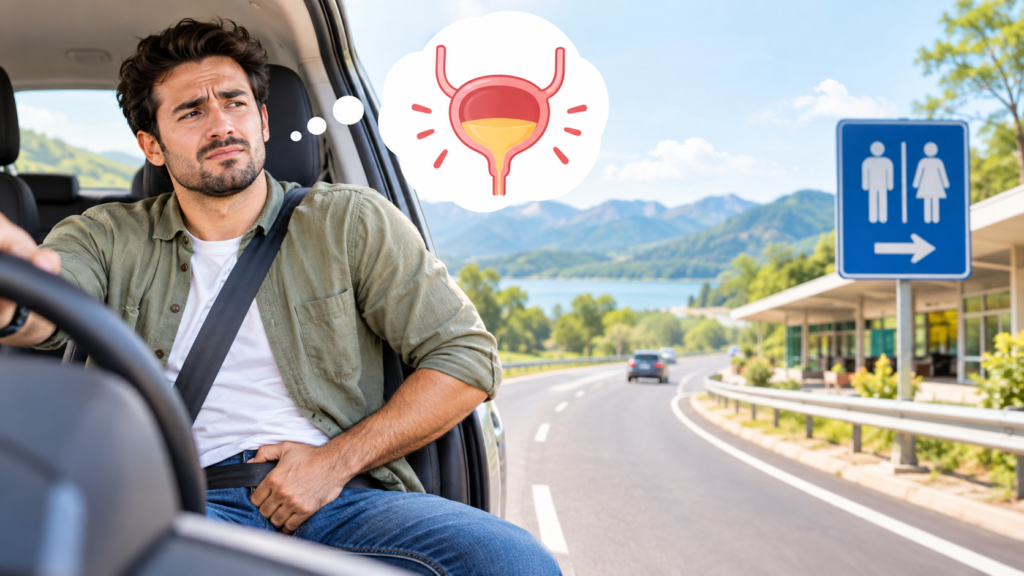
Don’t Let a Road Trip Become a Bladder Problem
Road trips, weekend getaways, and long office commutes often come with one common habit—holding your pee until the next stop. While it may seem like a harmless way to save time, regularly delaying bathroom breaks can put unnecessary stress on your bladder and worsen urinary discomfort for some people.
Your bladder is designed to store urine, but it is not meant to be ignored for hours at a stretch. Listening to your body’s signals is one of the simplest ways to support long-term urinary health.
What Happens When You Hold Your Pee Too Long?
As your bladder fills, it sends signals to your brain that it is time to empty it. Ignoring those signals repeatedly forces your bladder muscles to stretch and work harder than necessary.
For some people, this may lead to temporary discomfort, while those with existing urinary issues may notice their symptoms become worse.
Possible effects include:
- Increased bladder pressure
- Pelvic discomfort
- Difficulty emptying the bladder completely
- A stronger, more urgent need to urinate later
- Worsening symptoms in people with certain bladder conditions
Why Long Drives Make It Worse
Long hours behind the wheel create the perfect conditions for delaying bathroom breaks.
Common reasons include:
- Not wanting to stop frequently
- Limited access to clean restrooms
- Busy travel schedules
- Fear of losing time during the journey
Instead of waiting until the discomfort becomes unbearable, planning short breaks can help keep both you and your bladder more comfortable.
Who Should Be Extra Careful?
Some people should pay closer attention to bladder habits during travel, including:
- Older adults
- People with overactive bladder
- Those with recurrent urinary tract infections (UTIs)
- Men with prostate enlargement
- Individuals recovering from urological procedures
If you already experience urinary symptoms, holding urine for long periods may make those symptoms more noticeable.
Smart Bladder Habits for Every Journey
A few simple changes can make a big difference.
Before You Leave
- Use the restroom before starting your trip.
- Avoid drinking excessive caffeine if it increases your urgency.
During the Drive
- Plan a restroom stop every 2–3 hours when possible.
- Stay hydrated instead of intentionally avoiding water.
- Don’t ignore repeated urges to urinate.
After the Journey
If you notice burning while urinating, frequent urgency, blood in urine, or difficulty passing urine after a trip, seek medical advice promptly.
The Bottom Line
Holding your pee for hours is not a badge of endurance. Your bladder works best when you respond to its natural signals instead of constantly postponing bathroom breaks. On your next road trip, treat restroom stops as part of the journey—not an inconvenience. A few extra minutes today can help keep your urinary system healthier and your travels far more comfortable.