
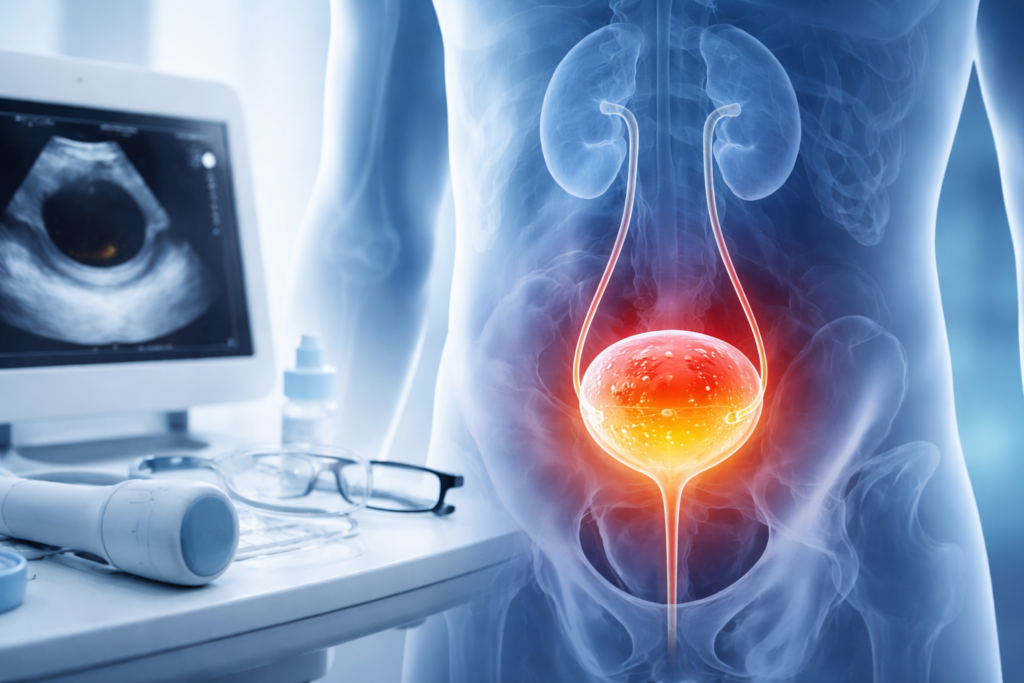
Most people assume that when they finish urinating, their bladder is completely empty. However, in reality, a small amount of urine often remains in the bladder. This leftover urine is known as post-void residual (PVR) urine, and understanding it can provide important insights into bladder health.
What Is Residual Urine?
Residual urine refers to the amount of urine left in the bladder after a person urinates. In healthy individuals, the bladder usually empties almost completely, leaving only a very small amount behind. Typically, less than 50 milliliters of residual urine is considered normal. In older adults, up to 100 milliliters may still be acceptable.
Doctors measure residual urine using two common methods: ultrasound scanning of the bladder or inserting a catheter immediately after urination to check how much urine remains.
How the Bladder Normally Empties
Urination is a complex process involving coordination between the bladder muscle (called the detrusor muscle) and the urethral sphincter.
- The bladder fills with urine from the kidneys.
- When it becomes full, nerves send signals to the brain.
- The brain signals the bladder muscle to contract.
- At the same time, the sphincter muscles relax.
- Urine flows out through the urethra.
When this system works properly, the bladder empties efficiently with very little urine left behind.
Why Residual Urine Happens
Several factors can prevent the bladder from emptying completely:
1. Weak bladder muscles
If the bladder muscle cannot contract strongly enough, it may not push out all the urine.
2. Obstruction in the urinary tract
Conditions like prostate enlargement in men or urethral narrowing can block the flow of urine.
3. Nerve problems
Diseases that affect nerve signals—such as diabetes, spinal cord injuries, or neurological disorders—can interfere with bladder control.
4. Certain medications
Some drugs can weaken bladder contractions or tighten the sphincter muscles.
Symptoms of Incomplete Emptying
Sometimes people with high residual urine may notice symptoms such as:
- A feeling that the bladder is still full after urinating
- Frequent urination
- Weak urine stream
- Difficulty starting urination
- Urinary tract infections (UTIs)
However, in many cases, people may not notice any symptoms at all.
Why Residual Urine Matters
Leaving too much urine in the bladder can lead to several health issues. Stagnant urine provides a breeding ground for bacteria, increasing the risk of urinary tract infections. Over time, chronic retention can also stretch the bladder and weaken its muscles further. In severe cases, it can even affect kidney function.
When to See a Doctor
If you frequently feel that your bladder does not empty completely or experience recurring urinary infections, it is important to consult a healthcare professional. A simple bladder scan can quickly determine if residual urine is present.
Early diagnosis helps doctors identify the underlying cause and recommend appropriate treatment, which may include medication, pelvic floor exercises, lifestyle adjustments, or medical procedures if necessary.
The Bottom Line
While a small amount of residual urine is normal, consistently leaving too much urine in the bladder can signal an underlying issue. Understanding how the bladder works—and paying attention to urinary symptoms—can help maintain better urinary health and prevent complications.
Your body often gives subtle signals when something isn’t right. Listening to those signals can make a significant difference in long-term health.