
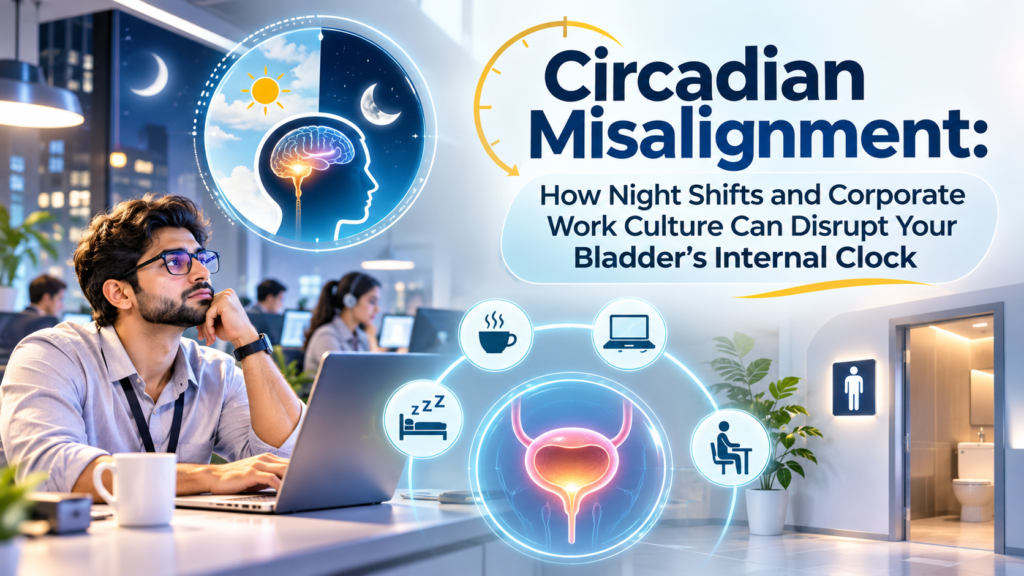
The modern workplace rarely follows a traditional 9-to-5 schedule. From IT professionals and software engineers to healthcare workers, BPO employees and international support teams, millions of people work overnight shifts to meet global business demands. While adjusting sleep schedules may seem manageable, the body’s internal biological clock may not adapt so easily.
One lesser-known consequence of disrupted body rhythms is a possible change in urinary patterns, including frequent urination during working hours and increased nighttime urination.
What Is Circadian Misalignment?
The circadian rhythm is the body’s natural 24-hour internal clock that regulates sleep, hormone release, body temperature, metabolism and several other functions.
Normally, the body produces less urine during sleep, partly due to the influence of antidiuretic hormone (ADH), which helps the kidneys conserve water.
However, when someone regularly works night shifts, sleeps during the day and remains active throughout the night, their natural biological rhythm can become misaligned.
This disruption may influence the normal daily pattern of urine production.
How Can Shift Work Affect Urination Patterns?
Irregular working hours may contribute to several urinary changes:
1. Increased Nighttime Urination
People who experience disrupted sleep schedules may notice changes in when they need to urinate. Nocturia, or waking from sleep to pass urine, can become particularly troublesome.
2. Frequent Urination During Night Shifts
Long working hours, increased caffeine consumption and irregular fluid intake may contribute to frequent bathroom visits.
3. Changes in Urine Production
Circadian disruption may affect hormonal regulation and the normal day-night variation in kidney function, potentially influencing urine production patterns.
4. Poor Sleep and Bladder Awareness
Repeated awakenings, stress and irregular sleep may increase awareness of bladder sensations and disturb sleep quality further.
Why Are IT and Corporate Professionals More Vulnerable?
Night-shift employees often develop habits that can affect urinary health, including:
- Excessive coffee or energy drink consumption to stay alert.
- Drinking large amounts of water at irregular intervals.
- Prolonged sitting and limited physical activity.
- Irregular meal timings and disturbed sleep schedules.
These factors may collectively influence bladder habits and overall health.
How Can You Maintain Better Bladder Health?
A few practical changes may help:
- Maintain a consistent sleep schedule whenever possible.
- Limit excessive caffeine, particularly before your main sleep period.
- Maintain adequate hydration throughout your waking hours.
- Avoid holding urine for unnecessarily long periods.
- Keep a bladder diary to identify changes in urination patterns.
When Should You Consult a Urologist?
Persistent frequent urination, burning sensation, urgency, blood in urine or repeated nighttime urination should not automatically be attributed to shift work. These symptoms may also indicate urinary infections, diabetes, overactive bladder or other urological conditions.
At UroCare Chennai, understanding the relationship between modern lifestyles and urinary health is an important part of comprehensive urological care.
Your work schedule may change, but your bladder health should never take a back seat. If urinary symptoms persist, seek professional urological evaluation.