
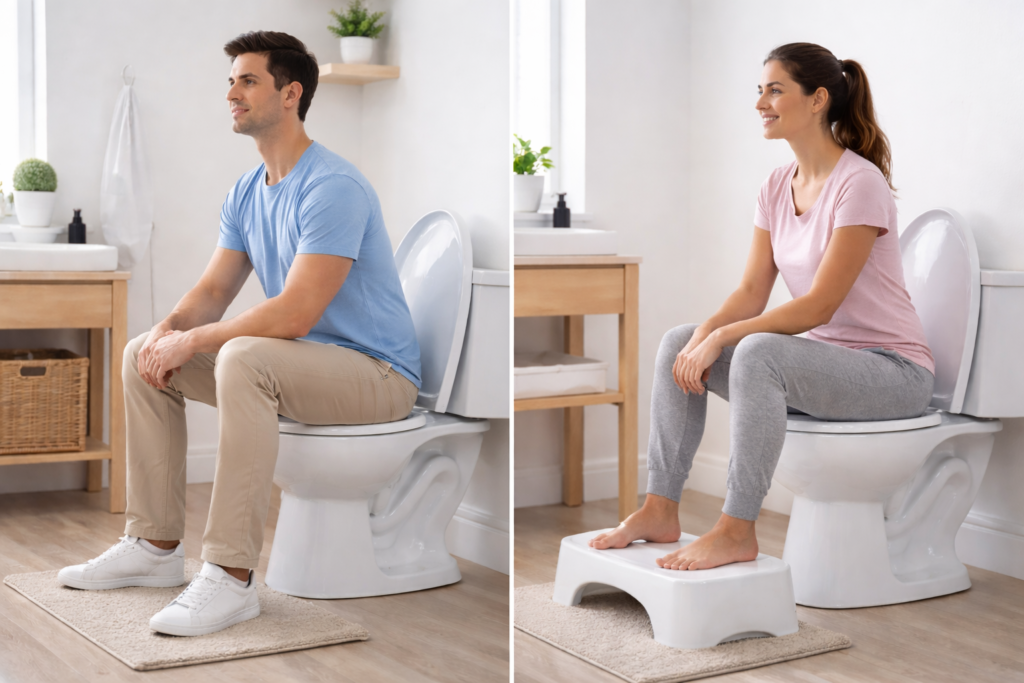
A Urologist’s Perspective on Healthy Urination
When it comes to urological health, most people think about water intake, infections, kidney stones, or prostate problems. But one simple factor is often ignored — your bathroom posture.
Yes, the way you sit or stand while urinating can significantly affect bladder emptying, prostate health, pelvic floor strength, and even long-term urinary function.
Let’s understand why posture matters more than you think.
Why Proper Urination Posture Is Important
Your urinary system — kidneys, bladder, urethra, and in men, the prostate — works through coordinated muscle relaxation and contraction. If your posture interferes with this natural process, it can lead to:
- Incomplete bladder emptying
- Urinary retention
- Increased strain on pelvic floor muscles
- Higher risk of urinary tract infections (UTIs)
- Worsening symptoms in prostate enlargement
Over time, poor habits can contribute to chronic urinary issues.
Best Bathroom Posture for Men
Many men prefer standing while urinating. While this is common, research suggests that sitting may be better, especially for:
- Men above 40
- Those with prostate enlargement
- Patients with weak urine flow
- Individuals experiencing incomplete emptying
Why Sitting Helps:
- Relaxes pelvic floor muscles
- Reduces abdominal pressure
- Improves bladder emptying
- Decreases post-void dribbling
Men with conditions like benign prostatic enlargement or early prostate concerns often experience smoother urine flow while sitting.
Best Bathroom Posture for Women
For women, correct sitting posture is crucial. Many women unknowingly hover over public toilets instead of sitting fully. This can cause:
- Pelvic floor tightening
- Incomplete bladder emptying
- Increased risk of UTIs
Healthy Tips:
- Sit fully on the toilet seat
- Keep feet flat on the ground
- Lean slightly forward
- Relax abdominal and pelvic muscles
- Avoid rushing
Hovering or straining disrupts normal bladder relaxation.
The Pelvic Floor Connection
Your pelvic floor muscles support the bladder and control urination. Chronic straining or improper posture can:
- Weaken pelvic muscles
- Contribute to urinary leakage
- Cause pelvic pain
- Increase risk of incontinence
Good posture helps these muscles function naturally without overexertion.
The Hidden Dangers of Straining
If you find yourself pushing hard to pass urine, this may indicate:
- Prostate enlargement
- Urethral narrowing
- Bladder dysfunction
- Pelvic floor dyssynergia
Straining increases abdominal pressure and can worsen underlying conditions. Urination should be smooth and effortless.
If it’s not, it’s time to consult a urologist.
Small Habit, Big Impact
Healthy urination should be:
- Comfortable
- Complete
- Pain-free
- Without excessive waiting or pushing
Making simple posture corrections can:
- Improve bladder emptying
- Reduce nighttime urination
- Lower infection risk
- Support long-term urological health
When to See a Urologist
Seek medical advice if you experience:
- Weak urine flow
- Frequent urination
- Burning sensation
- Blood in urine
- Feeling of incomplete emptying
- Urinary leakage
Early diagnosis prevents complications and improves quality of life.
Final Thoughts
Bathroom posture may seem like a small detail, but in urology, small habits make a big difference. Just as we focus on hydration and diet, we must also pay attention to how we urinate.
Sometimes, better health starts with simply sitting properly